✅ Oswaal Class 10 SST — Topper's Choice
✅ Together With SST — Best for Practice
✅ Oswaal Science Class 10 — Chapter Wise
✅ RD Sharma Maths — Most Popular
Complete CBSE : The Making of a Global World Class 10 Notes
The Pre-modern World
When we talk about globalisation, we usually think of the modern world—international trade, multinational companies, air travel, and the internet. Many people assume that globalization began only in the last fifty years.
However, the making of the global world has a much longer history. For thousands of years, people have traveled across continents in search of trade, employment, knowledge, and spiritual fulfillment. Along with goods and money, they also carried ideas, technologies, customs, and even diseases.
Understanding these early connections helps us see that the modern globalized world is the result of a long historical process.
From ancient times, traders, travelers, priests, and pilgrims moved over vast distances. They linked distant societies and created networks of exchange.
Some early examples include:
- Around 3000 BCE, the Indus Valley Civilization traded with West Asia.
- Cowries (small seashells used as currency) from the Maldives reached China and East Africa.
- Disease-causing germs also spread over long distances, connecting different regions of the world.
These examples show that global interconnectedness existed long before the modern age.
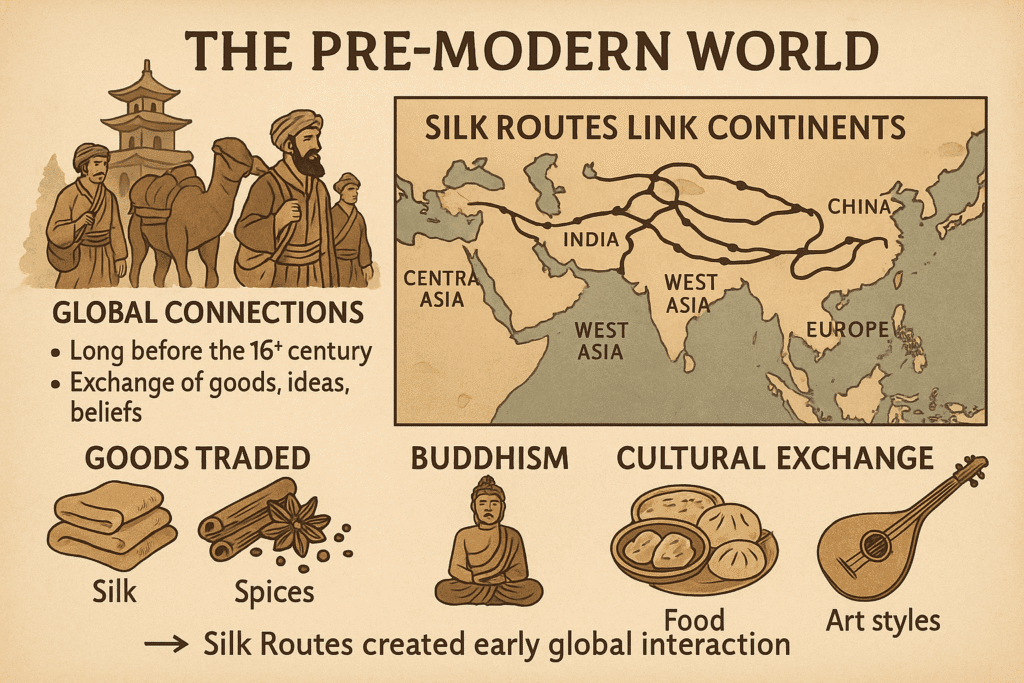
Silk Routes Link the World
The Silk Routes were among the most important trade networks of the pre-modern world.
The name comes from the Chinese silk that was transported westward along these routes. In reality, the Silk Routes were not a single road but a vast network of land and sea routes connecting:
- China
- India
- Southeast Asia
- Central Asia
- West Asia
- Europe
- North Africa
These routes existed from before the Christian era and remained active until the fifteenth century.
Goods Traded Along the Silk Routes
Many valuable goods moved along these routes:
- Chinese silk and pottery
- Indian textiles and spices
- Southeast Asian products
- Gold and silver from Europe
Cultural Exchange Through the Silk Routes
Trade was not limited to goods. It also encouraged the exchange of:
- Religious ideas
- Languages
- Artistic styles
- Scientific knowledge
Important examples:
- Buddhism spread from India to Central, East, and Southeast Asia.
- Christian missionaries traveled to Asia.
- Muslim traders and preachers spread Islam.
Thus, the Silk Routes played a vital role in linking different civilizations and cultures.
Food Travels: Spaghetti and Potato
Food provides some of the best examples of cultural exchange.
As traders and travelers moved from one region to another, they carried seeds, crops, and recipes with them. Many foods we consider traditional actually originated in distant parts of the world.
Spaghetti and Noodles
It is believed that noodles traveled from China to the West and eventually evolved into spaghetti in Italy. Another view suggests that Arab traders introduced pasta to Sicily.
Although the exact origin is uncertain, this example shows how food traditions were influenced by long-distance contact.
American Crops Transform the World
Many foods that are common today were unknown in Europe, Asia, and Africa until about five hundred years ago.
These crops originated in the Americas:
- Potato
- Maize (corn)
- Tomato
- Chilli
- Groundnut
- Sweet potato
- Soya
They were introduced to the rest of the world after Christopher Columbus reached the Americas in 1492.
Importance of the Potato
The potato greatly improved the diet of poor Europeans. It was easy to grow and highly nutritious.
In Ireland, poor peasants became heavily dependent on it. When potato crops failed due to disease in the 1840s, a devastating famine occurred and hundreds of thousands died of starvation.
This shows how the transfer of crops could dramatically affect population growth and human survival.
Conquest, Disease and Trade
The sixteenth century marked a major turning point in world history.
European sailors discovered:
- A sea route to Asia.
- The American continents.
These discoveries brought the Americas into regular contact with Europe, Africa, and Asia for the first time.
India and the Indian Ocean Trade
Before European expansion, the Indian Ocean was already a busy trade zone. Goods, people, ideas, and customs moved across its waters.
The Indian subcontinent occupied a central position in this trade network.
When Europeans entered the Indian Ocean, they redirected some of this trade toward Europe.
Silver from the Americas
The Spanish conquered large parts of the Americas and extracted enormous quantities of silver from mines in present-day:
- Peru
- Mexico
This silver:
- Increased Europe’s wealth.
- Financed Europe’s trade with Asia.
- Strengthened Europe’s economic power.
Stories of immense wealth, such as the legend of El Dorado, inspired further expeditions.
Disease and European Conquest
One of the most powerful weapons of European conquerors was disease.
The indigenous peoples of the Americas had lived in isolation for thousands of years and had no immunity to diseases brought by Europeans, especially smallpox.
Smallpox spread rapidly and killed millions, destroying entire communities before many Europeans even arrived.
This greatly weakened resistance and made conquest easier.
Migration and Plantation Economy
Europe itself was affected by poverty, hunger, overcrowding, and religious persecution.
As a result, thousands of Europeans migrated to the Americas.
By the eighteenth century:
- Large plantations were established.
- Enslaved Africans were forced to grow sugar and cotton.
- Plantation products were exported to Europe.
This linked Europe, Africa, and the Americas in a vast economic system.
Shift of the World Trade Centre
Until the eighteenth century, India and China were among the richest and most important trading regions.
However:
- China reduced overseas contacts.
- The Americas became increasingly important.
- Europe gained access to American silver and colonial wealth.
Gradually, the center of world trade shifted westward, and Europe emerged as the dominant force in global commerce.
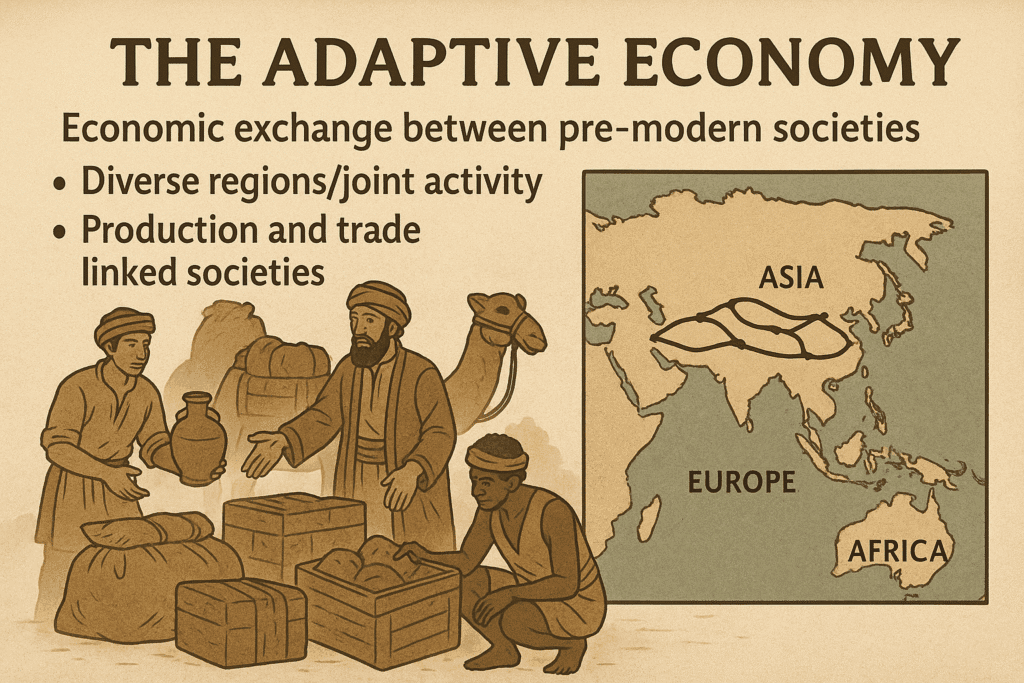
The Nineteenth Century (1815–1914)
The nineteenth century transformed the world more deeply than any earlier period. Economic, political, technological, and social changes connected distant countries and created an increasingly integrated world economy.
Economists describe this integration through three major international flows:
- Flow of Trade – movement of goods such as wheat, cotton, cloth, and minerals.
- Flow of Labour – migration of people in search of jobs and better opportunities.
- Flow of Capital – movement of money for investment in agriculture, industry, railways, and infrastructure.
These three flows were closely connected. Trade created demand for labor and capital, while capital financed new production and transport systems. Together, they reshaped the lives of millions.
A World Economy Takes Shape
One of the best examples of the emergence of a world economy was the changing pattern of food production and consumption in industrial Europe, especially in United Kingdom.
The Corn Laws and Their Abolition
As Britain’s population grew during the late eighteenth and early nineteenth centuries, demand for food grains increased. The government protected domestic landowners by restricting imports of grain through laws known as the Corn Laws.
These laws kept food prices high.
High food prices created problems:
- Workers demanded higher wages.
- Industrialists faced rising production costs.
- Urban consumers suffered from expensive food.
As a result, industrialists and city dwellers demanded the abolition of the Corn Laws.
When the Corn Laws were repealed, Britain began importing cheaper food from other parts of the world.
Global Agricultural Expansion
Cheap imports transformed agriculture worldwide.
To meet Britain’s growing demand:
- Land was cleared in Russia, Eastern Europe, America, and Australia.
- Railways were built to connect farms to ports.
- New harbors were constructed.
- Settlers moved to cultivate the land.
- Capital was invested from financial centers such as London.
This process also created a huge demand for labor.
Migration on a Massive Scale
Nearly 50 million Europeans migrated to America and Australia during the nineteenth century.
Globally, around 150 million people moved across continents and oceans in search of work and better living conditions.
By 1890, a global agricultural economy had emerged.
Food consumed in Britain now came from thousands of miles away and was produced by migrant laborers on large commercial farms.
Canal Colonies in Punjab
A similar process occurred in west Punjab, where the British developed irrigation canals and converted semi-desert areas into fertile agricultural lands known as the Canal Colonies.
These colonies produced wheat and cotton for export.
Expansion of World Trade
The same pattern occurred with cotton and rubber.
Between 1820 and 1914, world trade expanded 25 to 40 times.
About 60 percent of global trade consisted of primary products such as:
- Wheat
- Cotton
- Coal
- Minerals
Role of Technology
Technological developments played a crucial role in integrating the world economy.
Important inventions included:
- Railways
- Steamships
- Telegraph
- Refrigerated ships
These technologies reduced transportation time and costs, making global trade more efficient.
Refrigerated Ships and Meat Trade
Before the 1870s, live animals were transported from America to Europe.
This system was inefficient because:
- Animals occupied large space.
- Many died during the journey.
- Meat remained expensive.
The invention of refrigerated ships changed everything.
Animals were slaughtered in America, Australia, and New Zealand, and frozen meat was shipped to Europe.
This:
- Reduced costs.
- Lowered meat prices.
- Improved the diet of ordinary Europeans.
Better living standards helped create social stability in Europe and strengthened support for imperial expansion abroad.
Late Nineteenth-Century Colonialism
The expansion of world trade and economic growth had a darker side.
In many colonies, integration into the world economy led to:
- Loss of livelihoods
- Social disruption
- Environmental changes
- Political domination
European powers expanded aggressively during the late nineteenth century.
Partition of Africa
At the Berlin Conference, European nations divided Africa among themselves.
Major colonial powers included:
- Britain
- France
- Belgium
- Germany
- United States
Colonialism transformed African economies to serve European interests.
Rinderpest, or the Cattle Plague
In the 1890s, Africa was devastated by a deadly cattle disease called Rinderpest.
The disease was brought to East Africa through infected cattle imported from British Asia for Italian troops invading Eritrea.
It spread rapidly across the continent and killed about 90 percent of Africa’s cattle.
Impact on African Society
African livelihoods depended heavily on cattle.
The destruction of cattle led to:
- Loss of food and income
- Famine and poverty
- Collapse of local economies
European colonial rulers took control of the remaining cattle resources and used the crisis to force Africans to work on plantations and in mines.
Thus, disease became a tool that strengthened colonial domination.
Indentured Labour Migration from India
The nineteenth century also saw large-scale migration of Indian laborers under the indenture system.
Indentured workers signed contracts to work for five years in plantations, mines, and construction projects, with the promise of return passage to India.
Regions of Origin
Most migrants came from:
- Eastern Uttar Pradesh
- Bihar
- Central India
- Tamil Nadu
These regions faced:
- Decline of cottage industries
- Rising rents
- Debt
- Loss of land
Main Destinations
Indian indentured laborers were sent to:
- Trinidad and Tobago
- Guyana
- Suriname
- Mauritius
- Fiji
- Sri Lanka
- Malaysia
- Assam tea plantations
Harsh Conditions
Recruiting agents often misled or even abducted migrants.
On plantations, workers faced:
- Long working hours
- Harsh living conditions
- Few legal rights
Because of these conditions, indenture has been called a new system of slavery.
Cultural Contributions
Despite hardships, migrants created new cultural traditions.
Examples include:
- Hosay festival in Trinidad
- Chutney music in Trinidad and Guyana
- Influence on Caribbean culture and identity
Prominent descendants of indentured migrants include:
- V. S. Naipaul
- Shivnarine Chanderpaul
- Ramnaresh Sarwan
The system was abolished in 1921 after opposition from Indian nationalists.
Indian Entrepreneurs Abroad
Indian traders and bankers also played a major role in the global economy.
Groups such as:
- Shikaripuri Shroffs
- Nattukottai Chettiars
financed export agriculture in Central and Southeast Asia.
They developed sophisticated systems for transferring money over long distances and built indigenous corporate networks.
Indian traders also expanded into Africa and other parts of the world.
Hyderabadi Sindhi traders established shops in major ports and sold local and imported goods to tourists and merchants.
Indian Trade, Colonialism and the Global System
Before industrialization, India was famous for exporting fine cotton textiles to Europe.
However, the Industrial Revolution in Britain transformed this relationship.
Decline of Indian Textiles
British industrialists persuaded their government to impose tariffs on Indian cloth to protect British manufacturers.
As a result:
- Indian textile exports declined sharply.
- British machine-made cloth flooded Indian markets.
The share of cotton textiles in India’s exports fell:
- About 30% in 1800
- 15% by 1815
- Below 3% by the 1870s
Rise of Raw Material Exports
India increasingly exported raw materials such as:
- Raw cotton
- Indigo
- Opium
The export of opium to China became especially important. Britain used profits from opium sales to finance imports of tea and other goods from China.
Britain’s Trade Surplus with India
Britain exported more to India than it imported from India, creating a trade surplus.
This surplus helped Britain:
- Pay trade deficits with other countries.
- Cover “Home Charges,” including:
- Salaries and pensions of British officials.
- Interest on India’s debt.
- Private remittances to Britain.
In this way, India played a crucial role in sustaining the nineteenth-century global economic system, though often at the cost of its own economic development.
Other Resources of this Chapter
Other Resources
3. THE INTER-WAR ECONOMY (1914–1945)
This section of The Making of a Global World Class 10 Notes explains how wars transformed economies.
3.1 Wartime Transformations
Industries expanded rapidly
Women took jobs as men were fighting
Shortage of labour increased wages
Britain borrowed heavily from the U.S.
U.S. became leading economic power
3.2 Post-War Recovery
Production declined
Soldiers returned → unemployment rose
Crop prices fell sharply
Britain lost economic superiority
USA dominated global markets
3.3 Mass Production and Consumption
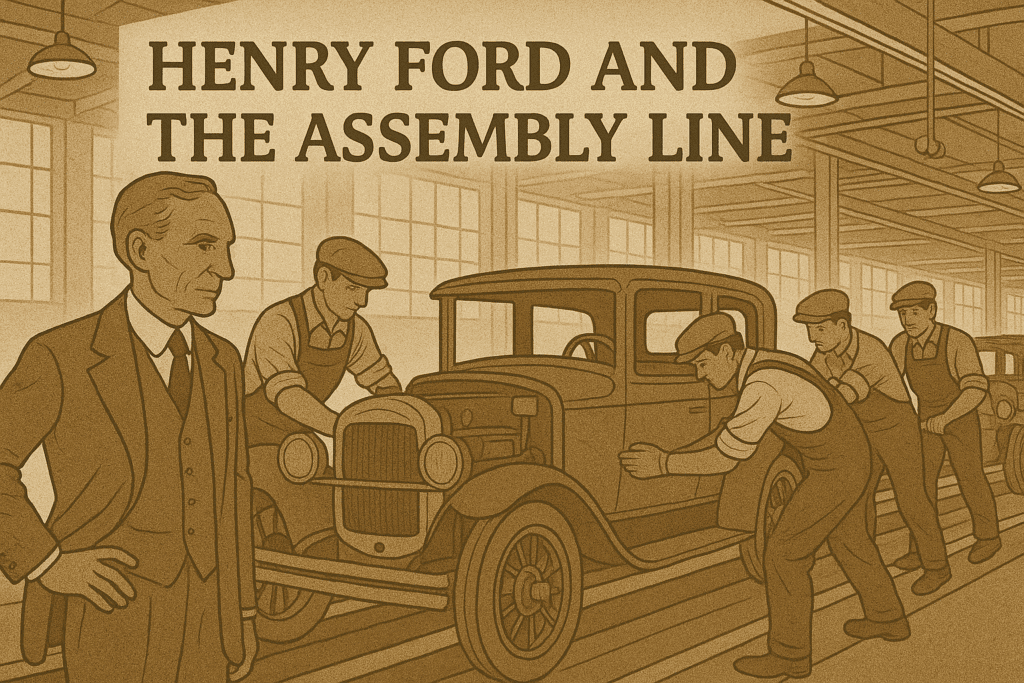
Henry Ford’s Assembly Line
Conveyor belts automated work
Each worker performed a single task
Increased productivity
Effects
Cars became affordable
Consumer culture expanded
USA became world’s industrial leader
3.4 The Great Depression (1929–1934)
Causes
Overproduction
Fall in prices
Bank failures
Stock market crash
Effects
World trade collapsed
Mass unemployment
Farmer incomes fell by 50%
Global poverty increased
3.5 India and the Great Depression
Indian farmers’ prices collapsed
Rural debt increased
British refused tax relief
Poverty deepened
Increased support for nationalism in 1930s
4. REBUILDING A WORLD ECONOMY
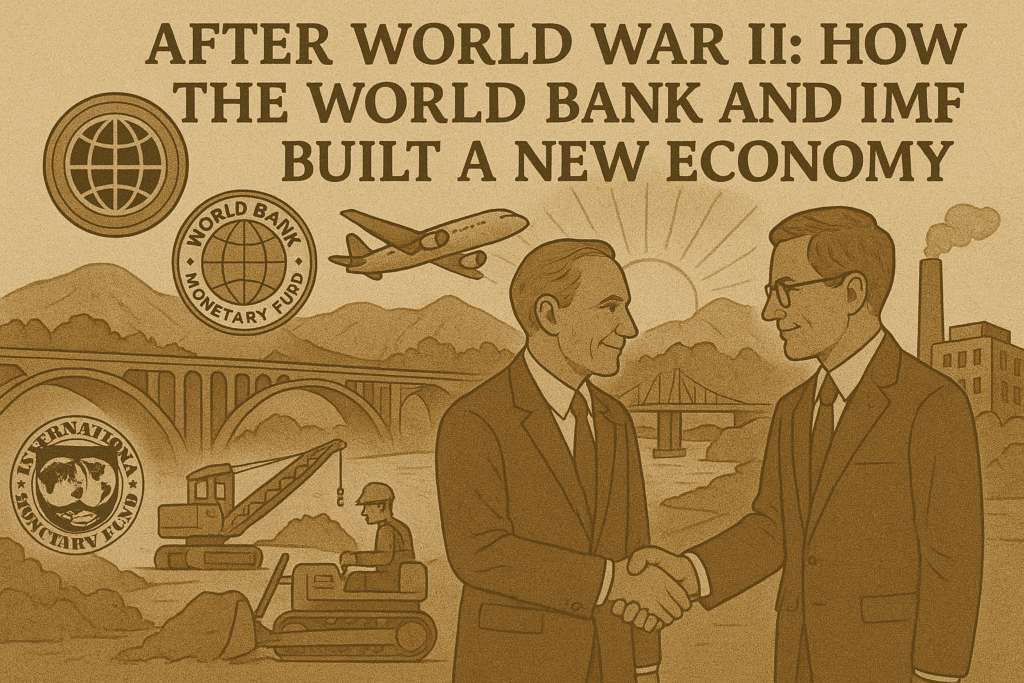
4.1 IMF & World Bank (Bretton Woods, 1944)
Created Institutions
IMF → stabilise currencies
World Bank → finance reconstruction
Bretton Woods System
Currency tied to the US dollar
Dollar linked to gold
Produced decades of economic stability
4.2 Early Post-War Years (1950–1970)
Rapid trade growth
Europe and Japan recovered
Rise of multinational corporations
Developing nations borrowed capital
4.3 Decolonisation and New Nations
India, Pakistan, Indonesia, Ghana gained independence
New nations wanted resource control
Changed global political order
4.4 End of Bretton Woods & Modern Globalisation
1970s Economic Shift
Dollar weakened
Gold-dollar link ended
New communication technology
IMF promoted open trade
Result
Modern globalisation began
Growth of global companies
Production spread across nations
The Making of a Global World Class 10 Notes
FAQs
The Making of a Global World Class 10 Notes
1. What does “The Making of a Global World” mean in Class 10 History?
“The Making of a Global World” explains how different regions of the world slowly became connected through trade, migration, travel, conquest, colonisation and technology. The chapter shows that globalisation is not a new concept—it began thousands of years ago with the Silk Routes and later expanded through European exploration, colonialism, industrialisation and international institutions. It helps students understand how today’s global world was shaped step by step.
2. Why are the Silk Routes important in The Making of a Global World Class 10 Notes?
The Silk Routes are important because they show the earliest form of global interaction. Goods like silk, spices and precious stones moved along these routes, but cultural items like art, religious ideas and stories also travelled. Buddhist monks used these routes to spread Buddhism to China and Japan. They prove that long-distance connections existed long before modern globalisation.
3. How did food items like potato and chillies influence the global world?
Potato, maize, tomatoes and chillies travelled from the Americas to Europe, Asia and Africa after Columbus reached the continent. These new crops increased food supply, reduced hunger and helped rapid population growth in Europe. Many of these foods became part of local cuisines worldwide. This shows that globalisation also happened through exchange of daily food items, not only trade goods.
4. What impact did European conquest have on the Americas?
European conquest destroyed native empires like the Aztecs and Incas. Diseases such as smallpox and measles killed nearly 90% of the indigenous population because they had no immunity. Europeans took control of land, resources and silver mines. The massive export of American silver connected Asia, Europe and the Americas into one global economic system for the first time.
5. How did the 19th century become a period of global integration?
The 19th century saw large-scale movement of goods, people and capital. Steamships, railways and telegraph systems reduced travel time and made long-distance communication much easier. British trade expanded across continents and millions of Indians, Chinese and Europeans migrated as workers. Colonial empires connected Asia, Africa and America to European markets, creating a global economy.
6. What was indentured labour and why is it important in The Making of a Global World Class 10 Notes?
Indentured labour refers to workers who signed a contract to work overseas for 5 years in exchange for wages, but often lived like slaves. Between 1820 and 1916, around 30 lakh Indians were sent to Mauritius, the Caribbean, Fiji, Malaysia and Africa. This system shows how poor people were forced into global migration due to poverty, famine and high taxes in India.
7. What caused the Great Depression of 1929?
The Great Depression was caused by overproduction, declining prices, falling incomes, a stock market crash and widespread bank failures. Factories shut down, farmers lost markets and international trade dropped sharply. Unemployment spread worldwide. It is considered the biggest economic crisis in modern history and deeply affected countries like India that were part of the global economy.
8. How did the Great Depression affect India?
India faced severe agricultural distress because crop prices fell drastically. Farmers received almost no money for their produce but still had to pay high taxes to the British. Rural debt increased and large numbers of workers lost their jobs in cities. Poverty and hunger increased across the country. This hardship pushed more people to support nationalist movements in the 1930s.
9. What was the Bretton Woods system?
The Bretton Woods system was an international economic arrangement created in 1944 after World War II. It fixed exchange rates by linking all major currencies to the US dollar, and the dollar to gold. Two major institutions—the IMF and World Bank—were created to support international trade and economic stability. The system helped rebuild war-damaged countries and promoted decades of economic growth.
10. How did globalisation begin after the 1970s?
Globalisation increased in the 1970s due to advances in computers, communication technology, cheaper transport and the collapse of the Bretton Woods system. Countries reduced trade restrictions, and companies spread production across multiple nations. International institutions encouraged free markets. The 1970s marked the beginning of modern economic globalisation, shaping the highly connected world we live in today.
5 Long-Answer Questions
The Making of a Global World Class 10 Notes
1. Explain how the pre-modern world was already connected before modern globalisation.
The pre-modern world had strong global connections through the Silk Routes, Indian Ocean trade, Middle Eastern caravans and Mediterranean networks. These routes carried goods such as silk, spices, gold and precious stones, but they also transported ideas, technologies, art styles, religious beliefs and stories. Food items like potato, maize and chilli also travelled across continents. Traders, monks, soldiers and migrants moved freely from Asia to Europe. These early interactions show that globalisation began long before modern industrialisation.
2. Describe the major components of the world economy that emerged in the 19th century.
The 19th-century world economy was shaped by three major flows: the flow of goods, the flow of labour and the flow of capital. Manufactured goods from Europe spread across Asia and Africa, while colonies supplied raw materials. Millions of people migrated as workers to plantations, mines and railways. European investors funded infrastructure like ports, railways and plantations. Technology such as steamships, telegraph and railways connected distant regions. Together, these flows created unprecedented global integration.
3. Discuss the experiences of Indian indentured labourers during the 19th century.
Indian indentured labourers were mostly poor peasants from UP, Bihar and Tamil Nadu who were recruited by agents. They signed a 5-year contract but soon realised the work was extremely harsh. They faced long hours, low wages, frequent punishments and strict rules that restricted movement. Plantation owners used force to maintain discipline. Many labourers stayed permanently after their contract, developing Indian cultural traditions abroad such as Bhojpuri music, festivals and food. Their migration reflects the hardships created by colonial economic policies.
4. Explain the causes and global impact of the Great Depression.
The Great Depression began because of declining agricultural prices, overproduction by industries, bank failures and the 1929 stock market crash. Countries increased import tariffs, worsening the crisis. World trade collapsed, unemployment rose dramatically and farmers lost half their income. Factories shut down across Europe and America. Colonies like India suffered greatly, as agricultural prices fell sharply. The Depression exposed the weaknesses of the global economic system and pushed nations toward stronger economic regulation.
5. What was the Bretton Woods system and how did it shape the global economy after World War II?
The Bretton Woods system was established in 1944 to rebuild the international economy after World War II. It fixed exchange rates by linking currencies to the US dollar and the dollar to gold. The IMF and World Bank were created to ensure stability and provide loans to struggling countries. The system encouraged world trade, investment and reconstruction of Europe and Japan. It led to two decades of economic growth known as the “Golden Age of Capitalism.” It laid the foundation for modern globalisation.
MCQs
The Making of a Global World Class 10 Notes
Silk Routes connected which regions?
a) Europe and Australia
b) India, China, Central Asia, Europe
c) Africa only
d) None
Answer: bWhich food came from the Americas?
a) Wheat
b) Potato
c) Rice
d) Barley
Answer: bRinderpest affected which continent the most?
a) Asia
b) Africa
c) Europe
d) Australia
Answer: bIndentured labourers worked mainly on:
a) Offices
b) Plantations
c) Schools
d) Factories
Answer: bWhich year did the Great Depression begin?
a) 1920
b) 1929
c) 1939
d) 1914
Answer: bIMF was created in:
a) 1950
b) 1944
c) 1970
d) 1930
Answer: bThe assembly line was introduced by:
a) James Watt
b) Henry Ford
c) Thomas Edison
d) Alexander Bell
Answer: bSilver from America mainly went to:
a) China
b) Africa
c) Australia
d) Egypt
Answer: a“Golden Age of Capitalism” refers to:
a) 1800–1850
b) 1950–1970
c) 1600–1700
d) 2000–2020
Answer: bBretton Woods system collapsed in:
a) 1945
b) 1970s
c) 1914
d) 1991
Answer: b
5-Marker Questions
The Making of a Global World Class 10 Notes
How did globalisation evolve from ancient times to the modern period?
Explain how technology transformed the global economy in the 19th century.
Describe the effects of colonialism on Asia and Africa.
Examine the global impact of the Great Depression.
Discuss the role of IMF and World Bank in rebuilding the world economy.
Supportive Study Material Class 10 Science
- Class 10 Science Quiz
- Class 10 Science tests
- Class 10 Science Worksheets
- Class 10 Science PYQs
- Class 10 Science NCERT Solution
CBSE Class 10 Complete Exam Preparation Materials
Nationalism in India Chapter 2 Notes
✅ Oswaal Class 10 SST — Topper's Choice
✅ Together With SST — Best for Practice
✅ Oswaal Science Class 10 — Chapter Wise
✅ RD Sharma Maths — Most Popular
✅ Oswaal Class 10 SST — Topper's Choice
✅ Together With SST — Best for Practice
✅ Oswaal Science Class 10 — Chapter Wise
✅ RD Sharma Maths — Most Popular