Agriculture Class 10 Notes | Chapter 4 Complete Guide for 95+ Marks
1. IMPORTANCE OF AGRICULTURE
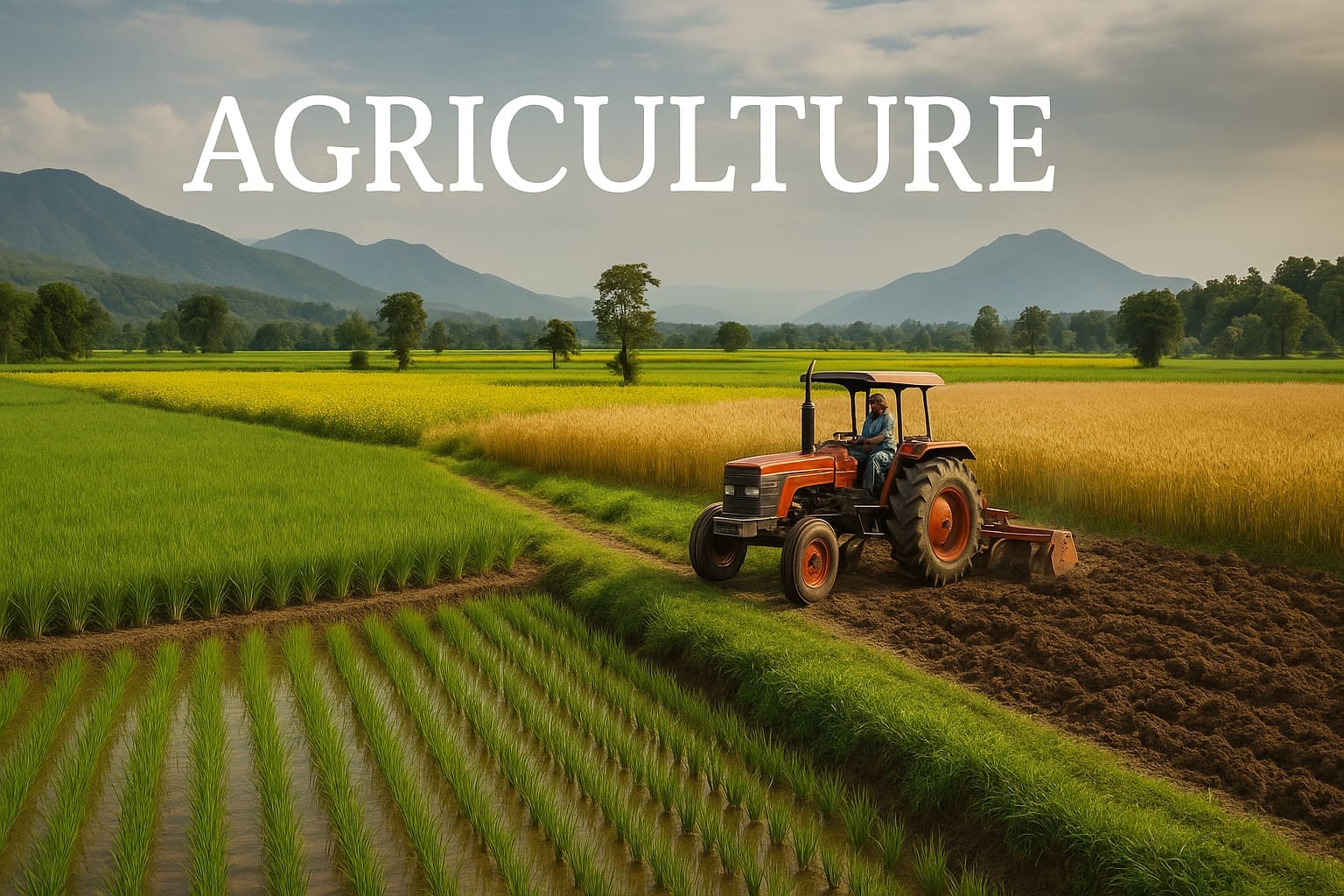
Agriculture is the backbone of India’s economy and the heart of agriculture class 10 notes, because it supports the livelihood, food supply, and economic structure of the nation. About 58% of India’s population depends directly on farming, which shows how central agriculture is to rural life. It provides food crops like rice and wheat, and also raw materials to major industries such as cotton textiles, jute mills, sugar industries, edible oil factories, and food processing units.
Agriculture in India has two faces—traditional and modern.
Traditional agriculture depends heavily on human labour, animals, simple tools, and rainfall.
Modern agriculture uses HYV seeds, fertilizers, tractors, irrigation, and technology.
However, modern techniques are not evenly spread across India due to regional inequalities in water, power supply, and income.
Beginner Explanation:
Agriculture means growing crops to feed people and supply goods to industries. Most Indians depend on farming for food and jobs, which is why agriculture is so important.
2. TYPES OF FARMING IN INDIA
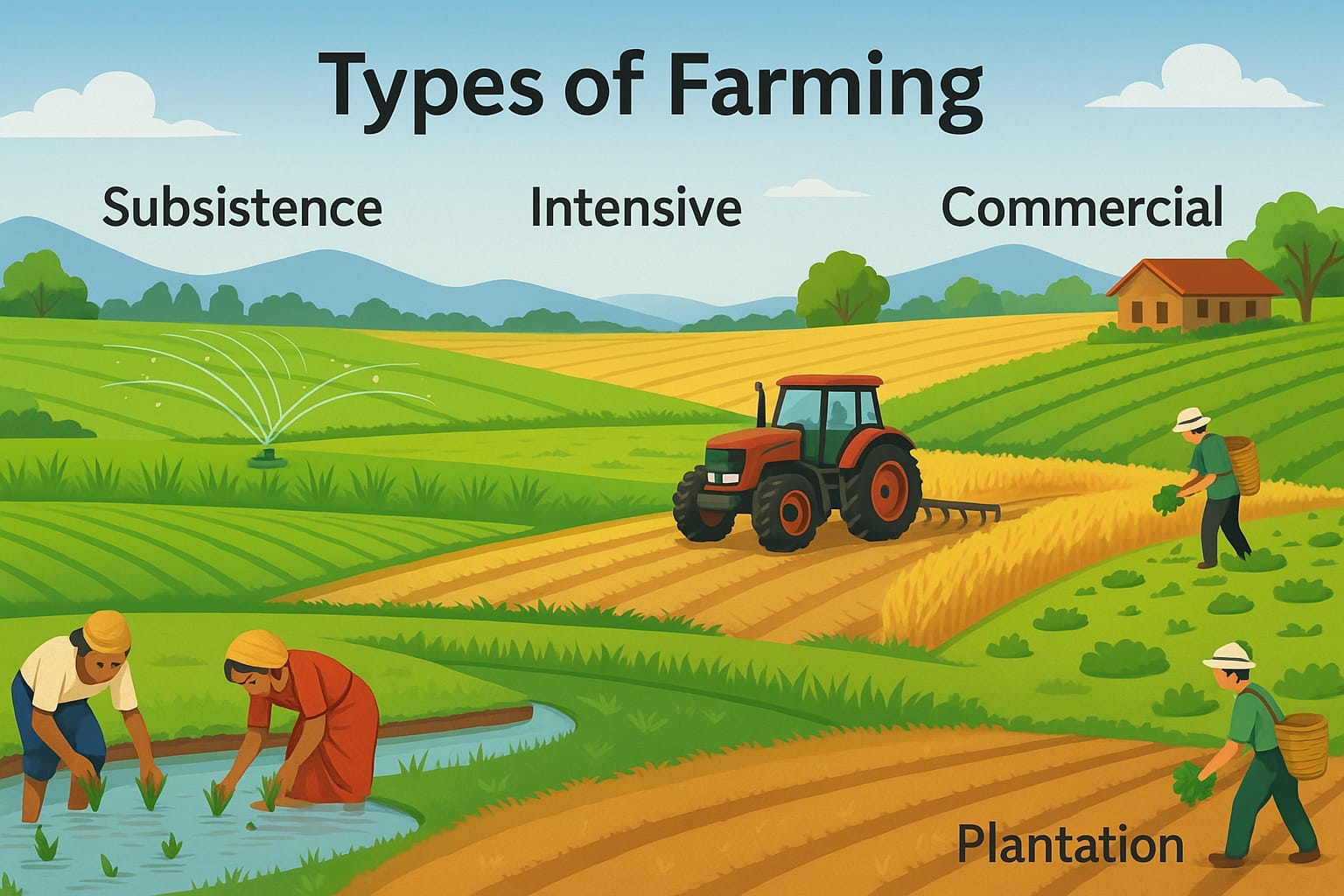
India has diverse farming types because every region has different climate, soil, rainfall, technology, and cultural practices. Understanding these types is essential for agriculture class 10 notes.
2.1 Primitive Subsistence Farming
This is the oldest and simplest form of agriculture.
Characteristics
Uses very simple tools like sticks or small hand tools because farmers cannot afford machines.
Depends completely on rainfall, so crop success depends on the monsoon.
Low productivity because no fertilizers, irrigation, or technology are used.
Practised mostly in tribal regions of Northeast India, Odisha, Chhattisgarh, Jharkhand.
Shifting Cultivation (Jhuming)
A traditional practice in NE India.
How it works:
Forest is cleared by cutting and burning trees.
Crops are grown on this land for 2–3 years until the soil loses fertility.
Land is left to regenerate, and farmers shift to a new area.
Why it is declining:
Leads to soil erosion
Causes forest loss
Governments encourage settled farming instead
This section is a key part of agriculture class 10 notes, especially for conceptual questions.
2.2 Intensive Subsistence Farming
Used in areas with high population and very small landholdings.
Characteristics
Farmers work extremely hard because land is small and must produce maximum yield.
Heavy use of manures, fertilizers, irrigation to increase productivity.
Often uses multiple cropping, meaning more than one crop grown per year.
Found in densely populated states like UP, Bihar, West Bengal, Tamil Nadu.
Beginner Explanation:
Small land + many people = farmers try to grow as much food as possible from the little land they have.
2.3 Commercial Farming
This type of farming is for selling in the market, not for family consumption. Agriculture class 10 notes.
Characteristics
Uses HYV seeds and modern irrigation.
Uses pesticides, machinery, and scientific techniques.
Aim is high profit, not survival.
Found widely in Punjab, Haryana, Maharashtra, Karnataka.
Plantation Farming
Plantation is a type of commercial farming where a single crop is grown on large estates.
Features:
Capital-intensive (needs huge investment)
Uses migrant labour
Requires proper transport and processing
Examples:
Tea → Assam
Coffee → Karnataka
Rubber → Kerala
Sugarcane → UP & Maharashtra
This explains a major chunk of agriculture class 10 notes on farming systems.
3. CROPPING PATTERNS IN INDIA
India has three cropping seasons, based on monsoon and temperature. These are always asked in exams and essential to agriculture class 10 notes.
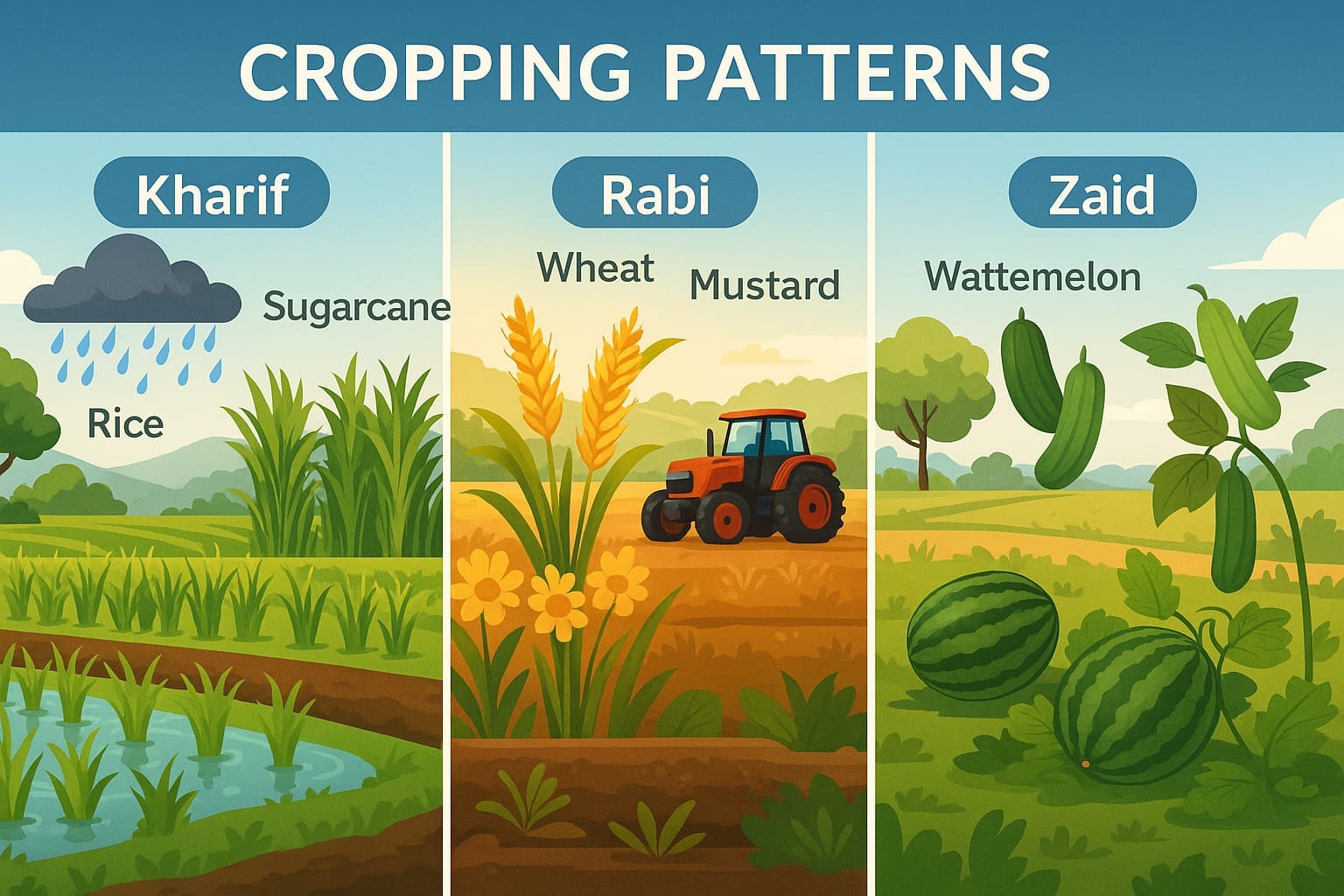
3.1 Kharif (Monsoon Crops)
Sown: June (with monsoon)
Harvested: Sept–Oct
Major Crops:
Rice
Jowar
Bajra
Maize
Cotton
Groundnut
Soybean
Major States:
Assam, West Bengal, Odisha, UP, Andhra Pradesh, Maharashtra, Gujarat.
Beginner Explanation:
Kharif crops need lots of rain because they grow during monsoon.
3.2 Rabi (Winter Crops)
Sown: Oct–Nov
Harvested: March–April
Major Crops:
Wheat
Barley
Gram
Mustard
Peas
Major States:
Punjab, Haryana, UP, Himachal Pradesh, J&K, Rajasthan.
Beginner Explanation:
Rabi crops grow in cold winters and need less rain.
3.3 Zaid (Short Summer Crops)
Grown between Rabi and Kharif.
Crops:
Watermelon
Muskmelon
Cucumber
Fodder crops
Vegetables
Beginner Explanation:
Zaid crops grow quickly in warm months and are mostly fruits and vegetables.
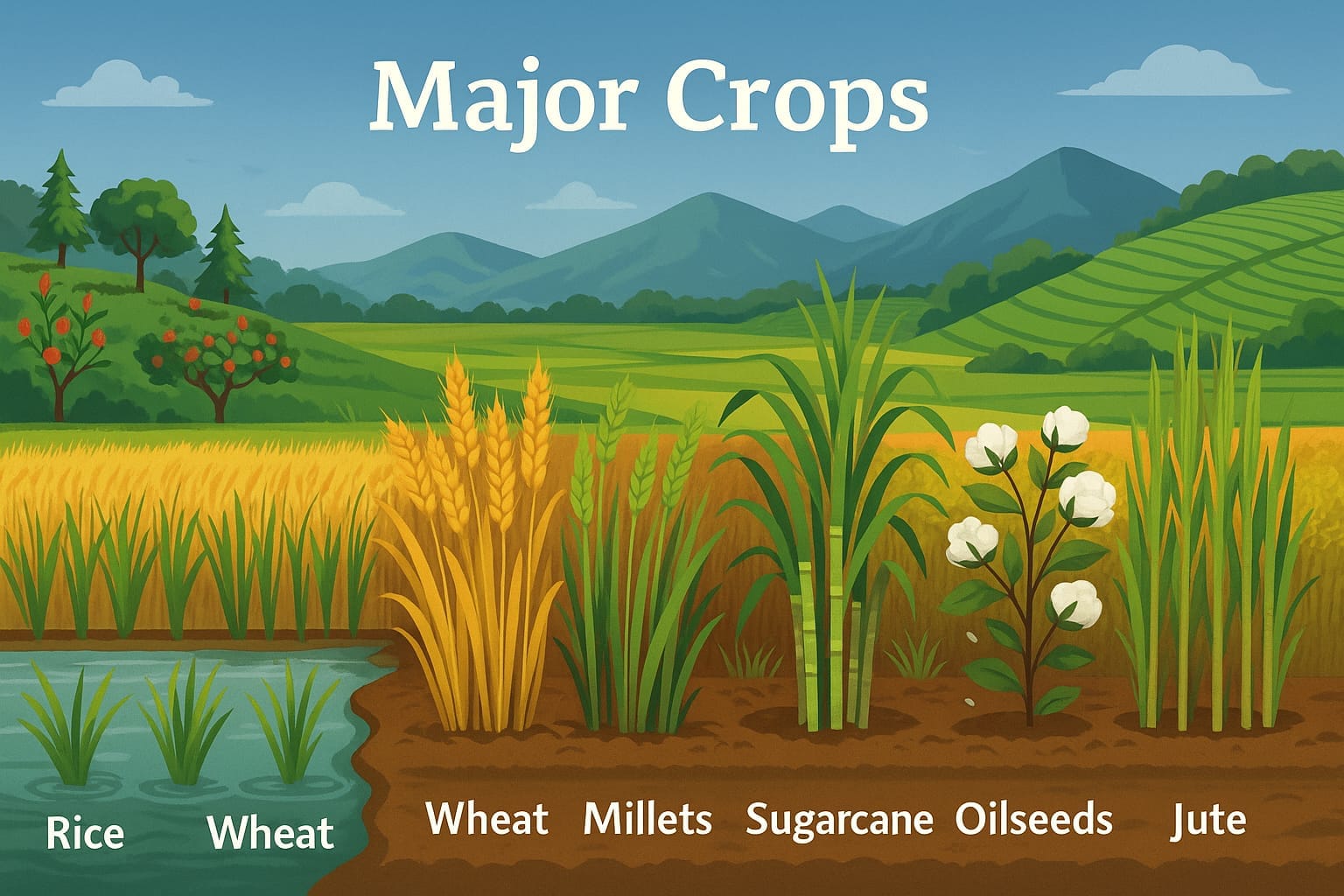
4. MAJOR CROPS OF INDIA
(A critical part of agriculture class 10 notes, heavily tested in exams)
4.1 Food Grains
A. Rice
Type of Crop:
Rice is a staple food crop and a primary source of calories for most Indians. It is a water-loving crop and forms the base of India’s food security.Season:
Grown mainly in the Kharif season, meaning it is sown at the start of monsoon (June–July) and harvested in early winter. In coastal/tropical areas, rice is grown 2–3 times a year.Growing Conditions:
Needs high temperature (25°C+), high humidity, and abundant rainfall (100–200 cm). Rice fields require standing water, so areas with good irrigation or monsoon supply are ideal.Areas Found:
Major rice states include West Bengal, Uttar Pradesh, Punjab, Haryana, Assam, Odisha, Andhra Pradesh, Tamil Nadu, Kerala, Chhattisgarh.India’s Rank:
India is the 2nd largest producer of rice in the world after China.
B. Wheat
Type of Crop:
Wheat is a major Rabi food crop and the second most important staple grain in India.Season:
Grown in the Rabi season — sown in winter (Oct–Nov) and harvested in spring (March–April).Growing Conditions:
Requires moderate temperature (10–15°C for sowing, 21–26°C for ripening), less rainfall, and well-drained loamy soil. Irrigation is essential in northwestern plains.Areas Found:
Major wheat-producing states: Punjab, Haryana, Uttar Pradesh, Madhya Pradesh, Rajasthan, Bihar.India’s Rank:
India is the 2nd largest producer of wheat globally after China.
C. Millets
Type of Crop:
Millets are coarse grains and highly nutritious. They are drought-resistant and vital for dryland farming.Season:
Mostly Kharif crops, though some varieties like ragi may be grown in Rabi.Growing Conditions:
Can survive in low rainfall regions.Jowar: Needs moderate rain
Bajra: Thrives in sandy & dry soil
Ragi: Grows well on hill slopes
Areas Found:
Major producers: Maharashtra, Karnataka, Rajasthan, Andhra Pradesh, Tamil Nadu, Gujarat.India’s Rank:
India is the largest producer of millets in the world.
D. Maize
Type of Crop:
Maize is a food + fodder crop, used for eating, animal feed, and industrial starch.Season:
Mostly grown as a Kharif crop, but also grown in Rabi in some states.Growing Conditions:
Needs 21–27°C temperature, moderate rainfall, and well-drained soil.
Requires sunlight for photosynthesis.Areas Found:
Major producers: Karnataka, Uttar Pradesh, Bihar, Madhya Pradesh, Andhra Pradesh, Telangana.India’s Rank:
India is among the top 7 maize producers globally.
Agriculture class 10 notes.
E. Pulses
Type of Crop:
Pulses are protein-rich food crops and essential for soil improvement due to nitrogen fixation.Season:
Mostly Rabi crops, though some (like Moong) are grown in Kharif.Growing Conditions:
Need less water, moderate temperature, and do well in dry, infertile soils. They enrich soil nitrogen.Areas Found:
India’s major pulse-producing states: Madhya Pradesh, Rajasthan, Maharashtra, Uttar Pradesh, Karnataka.India’s Rank:
India is the largest producer and consumer of pulses in the world.
4.2 Cash Crops
A. Sugarcane
Type of Crop:
Sugarcane is a commercial cash crop used for sugar, jaggery (gur), ethanol, and molasses.Season:
It is a tropical crop grown mainly as a Kharif crop but harvested after 10–12 months.Growing Conditions:
Needs hot and humid climate (21–27°C), abundant water, and deep fertile soil.
Very long growing season.Areas Found:
Leading states: Uttar Pradesh, Maharashtra, Karnataka, Tamil Nadu, Bihar, Punjab.India’s Rank:
India is the 2nd largest producer of sugarcane after Brazil.
B. Oilseeds
Type of Crop:
A major category of cash crops used for edible oils.Season:
Grown in both Kharif (groundnut) and Rabi (mustard) seasons depending on the crop.Growing Conditions:
Require warm climate, medium rainfall, and well-drained soil. Groundnut thrives in sandy soil; mustard in cold winters.Areas Found:
Major states: Gujarat, Rajasthan, Maharashtra, Madhya Pradesh, Andhra Pradesh.India’s Rank:
India is one of the top 5 oilseed producers in the world.
C. Tea
Type of Crop:
Tea is a major plantation crop and an important export product.Season:
Plucked throughout the year in warm, humid regions.Growing Conditions:
Needs cool climate, well-distributed rainfall (150–200 cm), and well-drained hill slopes.
Requires abundant cheap labour.Areas Found:
Tea states: Assam, Darjeeling (WB), Tamil Nadu, Kerala.India’s Rank:
India is the 2nd largest producer of tea globally.
Agriculture class 10 notes.
D. Coffee
Type of Crop:
Coffee is a plantation cash crop and a high-value export commodity.Season:
Grown mainly in tropical regions with moderate temperatures.Growing Conditions:
Needs warm and wet climate, shade trees, and well-drained soil.Areas Found:
Major producers: Karnataka (largest), Kerala, Tamil Nadu.India’s Rank:
India is among the top 10 coffee producers globally.
E. Rubber
Type of Crop:
Rubber is an important commercial crop used for tyres, footwear, and industrial products.Season:
Grown in warm tropical climates throughout the year.Growing Conditions:
Needs hot, humid climate, 200 cm rainfall, and well-drained laterite soil.Areas Found:
Main states: Kerala (dominant), Tamil Nadu, Karnataka.India’s Rank:
India is among the top 6 rubber producers globally.
F. Cotton
Type of Crop:
Cotton is a major fiber cash crop, essential for the textile industry.Season:
A Kharif crop sown with monsoon and harvested in winter.Growing Conditions:
Needs high temperature, light rainfall, and black soil (regur) rich in clay that holds moisture.Areas Found:
Leading states: Maharashtra, Gujarat, Telangana, Karnataka, Madhya Pradesh.India’s Rank:
India is the largest cotton producer in the world.
Agriculture class 10 notes.
G. Jute
Type of Crop:
Jute is a fiber cash crop used for gunny bags, ropes and carpets.Season:
Mainly a Kharif crop.Growing Conditions:
Requires heavy rainfall, flood plains, and alluvial soil.Areas Found:
States: West Bengal (dominant), Assam, Bihar, Odisha.India’s Rank:
India is the largest producer of jute globally.
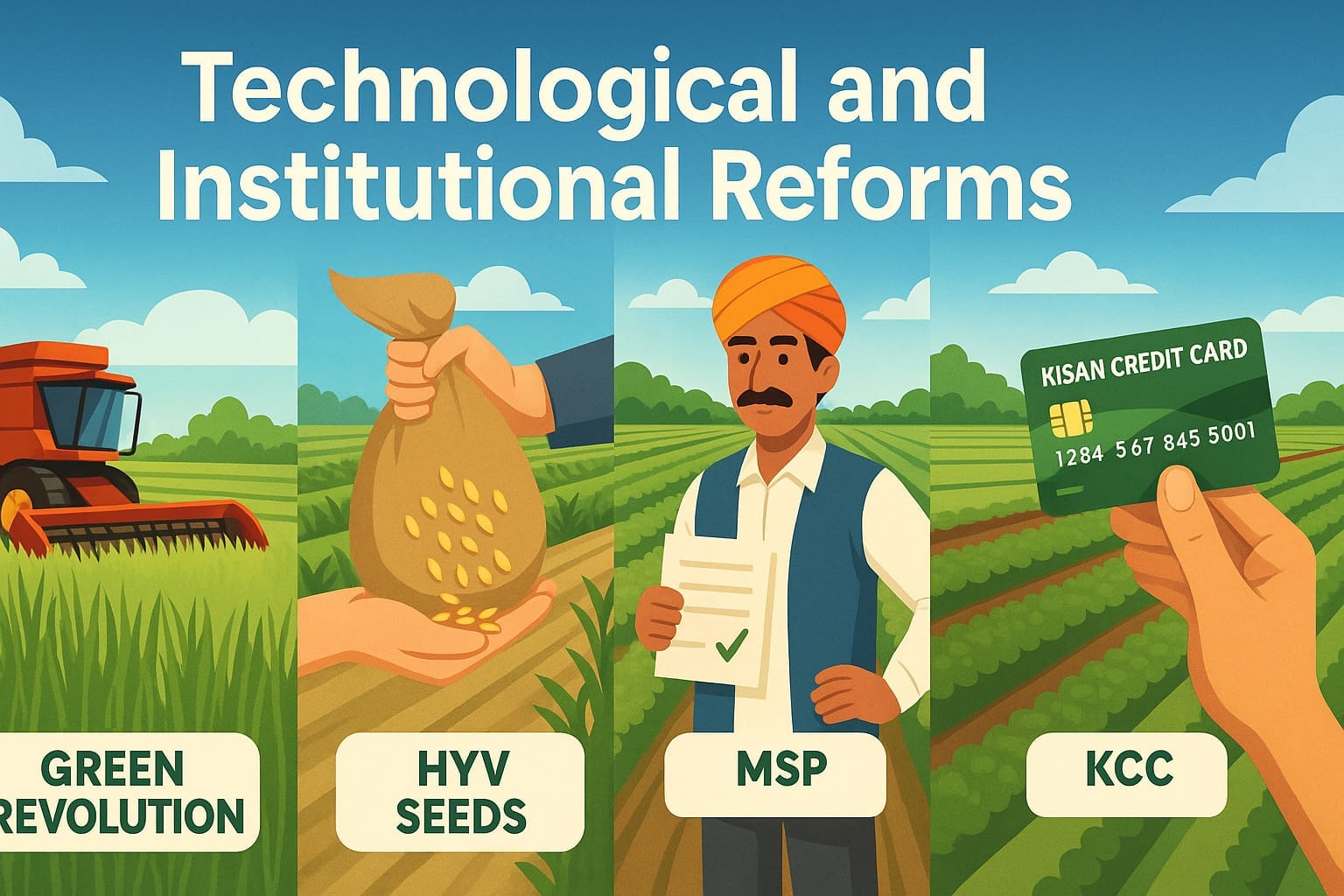
5. TECHNOLOGICAL & INSTITUTIONAL REFORMS
This section is extremely important in agriculture class 10 notes, especially for board questions.
5.1 Land Reforms
Abolition of Zamindari → removed landlords
Consolidation of Land → merged small pieces
Ceiling on Land → upper limit on land ownership
5.2 Green Revolution
Introduced HYV seeds, irrigation, fertilizers, pesticides, and farm machinery.
Impact:
Increased food production
Most successful in Punjab, Haryana, Western UP
Limitations:
Soil depletion
Chemicals overuse
Regional imbalance
Gap between rich & poor farmers
5.3 Revolutions
White Revolution: Milk → Operation Flood
Blue Revolution: Fish
Yellow Revolution: Oilseeds
6. FARMING CHALLENGES IN INDIA
Farmers face multiple natural, economic, and technological issues.
6.1 Monsoon Dependence
No rain → crop failure.
6.2 Fragmented Land
Small farms reduce productivity.
6.3 High Cost of Inputs
Seeds, fertilizers, machinery = expensive.
6.4 Low Productivity
Due to poor technology and lack of credit.
6.5 Credit Problems
Farmers borrow at high interest → debt.
6.6 Soil Degradation
Chemical overuse harms soil.
6.7 Market Issues
Middlemen exploit farmers; no stable price.
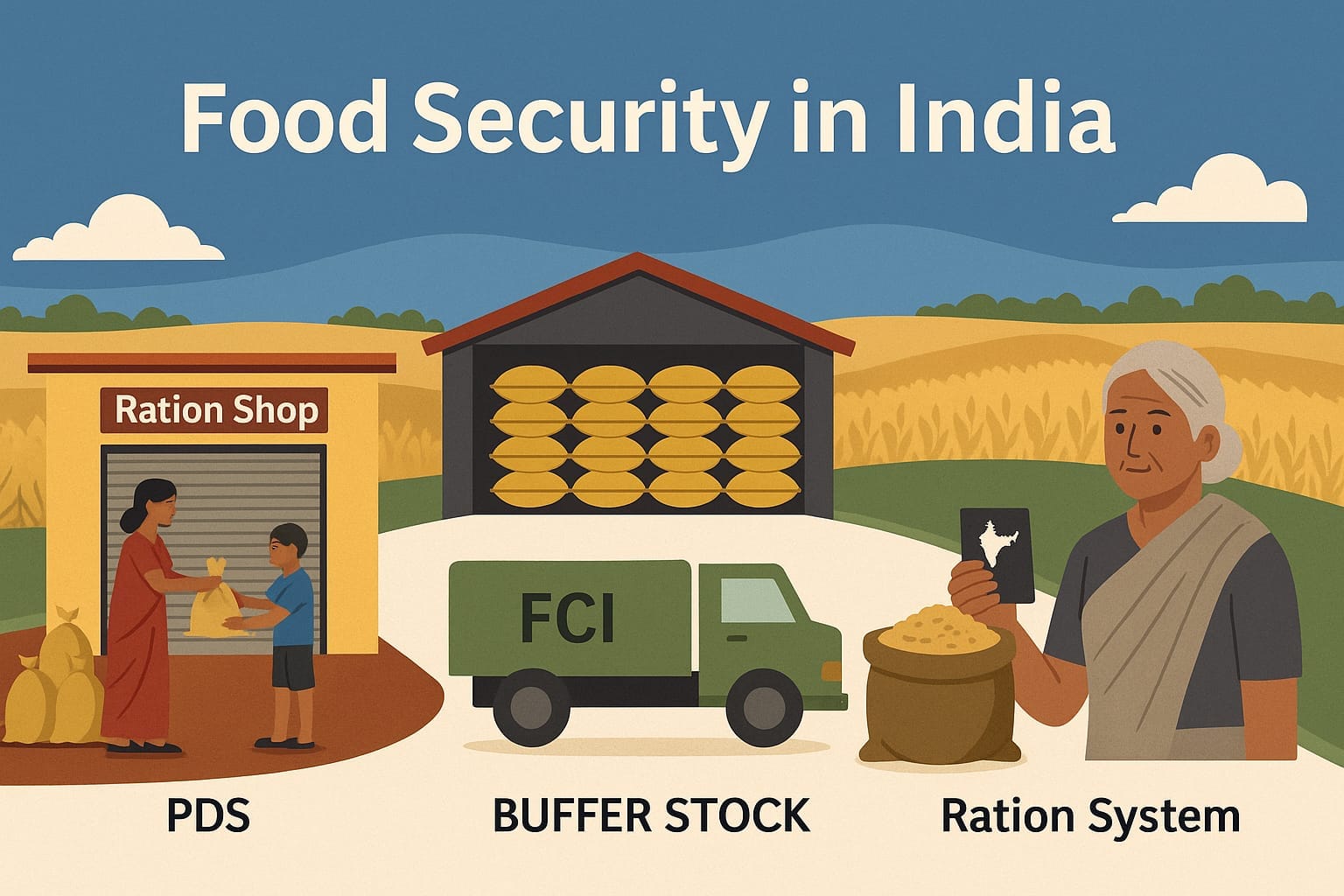
7. FOOD SECURITY & BUFFER STOCK
Food Security
Availability, accessibility, affordability of food.
Buffer Stock
Managed by FCI
Stores wheat & rice
Helps during famine or shortage
PDS
Provides food grains at subsidized rates.
Agriculture class 10 notes.
8. TRENDS IN AGRICULTURE
Diversification
Farmers shift from cereals to horticulture, floriculture, dairy, poultry.
Organic Farming
Uses natural fertilizers, eco-friendly.
Commercialization
Market-driven crop selection.
9. ROLE OF INSTITUTIONS
MSP: Guaranteed price
Cooperative Farming: Collective farming
NABARD: Rural credit
KCC: Easy short-term loans
e-NAM: Digital agricultural market
10. CLIMATE CHANGE IMPACT
Irregular rainfall
Heatwaves
Droughts
Floods
Reduced yields
Adaptation:
Micro-irrigation
Drought-resistant seeds
Cropping pattern changes
11. TERMS
Rabi: Winter crops like wheat.
Kharif: Monsoon crops like rice.
Zaid: Short-season crops like melons.
HYV Seeds: Produce high yield.
Irrigation: Artificial water supply.
Plantation: Single-crop large farming.
Subsistence Farming: For family use.
Commercial Farming: For market.
Agriculture Class 10 Notes | Chapter 4 Complete Guide for 95+ Marks
FAQs
1. Why is agriculture important for India’s economy?
Agriculture forms the foundation of India’s food system and supports more than half of the population. It ensures food security, provides raw materials for major industries, and creates employment in rural areas. Without a strong agricultural base, industries like textiles, sugar, food processing, and edible oils cannot operate. This makes agriculture a core theme of agriculture class 10 notes, as it connects the rural economy with national development.
Key Points:
Source of food grains for all citizens
Provides raw materials to industries
Generates rural employment
Helps maintain economic stability
Supports exports like tea, coffee, cotton
2. What is the difference between subsistence and commercial farming?
Subsistence farming focuses on growing food mainly for the farmer’s family. It uses simple tools, small landholdings, and depends on rainfall. In contrast, commercial farming is large-scale and market-oriented. It uses HYV seeds, fertilizers, irrigation, and machinery to maximize profits. This distinction is important in agriculture class 10 notes because India’s farming methods range from very traditional to highly modern.
Key Points:
Subsistence: small farms, simple tools, low output
Commercial: large farms, modern tools, high profits
Subsistence for family; commercial for market
Commercial farming uses HYV seeds and chemicals
3. Why are cropping seasons important in Indian agriculture?
Cropping seasons organize the entire agricultural calendar of India. They help farmers decide what to grow based on temperature, rainfall, and sunlight. Kharif crops need monsoon rain, Rabi crops need winter climate, and Zaid crops grow in short summer intervals. Understanding these cycles is essential for planning irrigation, fertilizers, and harvesting, which is why cropping seasons are repeatedly stressed in agriculture class 10 notes.
Key Points:
Kharif: monsoon crops
Rabi: winter crops
Zaid: short summer crops
Seasons help plan farming processes
Essential for high productivity
4. What was the impact of the Green Revolution in India?
The Green Revolution transformed India from a food-deficit nation to a food-surplus country. It introduced HYV seeds, chemical fertilizers, irrigation technologies, and modern machinery. While it increased production significantly, especially in Punjab and Haryana, it also caused regional inequality and soil degradation. These impacts make the Green Revolution a major focus of agriculture class 10 notes, especially for exam questions.
Key Points:
Rapid increase in wheat & rice production
HYV seeds and irrigation used widely
Benefited Punjab and Haryana most
Soil fertility decline due to chemicals
Increased gap between rich and poor farmers
5. What challenges do Indian farmers face today?
Indian farmers face multiple challenges ranging from natural issues like droughts and floods to economic problems like high input costs and unstable market prices. Many farmers depend on rain, and fragmented landholdings reduce productivity. Credit issues force them into debt. These challenges are highlighted in agriculture class 10 notes because they explain why farming remains risky in India.
Key Points:
Monsoon dependency
High cost of fertilizers and seeds
Fragmented land reduces output
Lack of credit and high interest loans
Market exploitation by middlemen
MCQs
1. Which factor best explains why intensive subsistence farming is common in states like Bihar and West Bengal?
A. Availability of large landholdings
B. High level of mechanisation
C. High population pressure on limited land
D. Excess production of cash crops
Answer: C. High population pressure on limited land
2. Which of the following combinations BEST represents Kharif crops grown under high rainfall?
A. Wheat, Gram, Mustard
B. Rice, Bajra, Cotton
C. Wheat, Maize, Peas
D. Barley, Mustard, Gram
Answer: B. Rice, Bajra, Cotton
3. Which technological input played the MOST important role in increasing wheat production during the Green Revolution?
A. Organic fertilizers
B. HYV seeds
C. Tank irrigation
D. Terrace farming
Answer: B. HYV seeds
4. Which statement about shifting cultivation (Jhum) is correct?
A. It uses advanced machinery
B. Land is used continuously for many years
C. Land is abandoned after soil fertility decreases
D. It is mainly practiced in Punjab
Answer: C. Land is abandoned after soil fertility decreases
5. Which climatic condition is essential for the successful growth of wheat?
A. Heavy rainfall at sowing
B. High temperature during harvest
C. Moderate temperature and winter climate
D. Continuous humidity
Answer: C. Moderate temperature and winter climate
6. Which is a major limitation of the Green Revolution?
A. Improved soil fertility
B. Decrease in irrigation
C. Regional imbalance in development
D. Reduction in pesticide use
Answer: C. Regional imbalance in development
7. Why are millets considered “coarse grains”?
A. Because they require advanced irrigation
B. They are grown only in coastal areas
C. They tolerate poor soils and drought
D. They spoil quickly after harvest
Answer: C. They tolerate poor soils and drought
8. Which statement BEST describes plantation farming?
A. Multiple crops grown on small farms
B. One crop grown on large estates with heavy investment
C. Crops grown only for family consumption
D. Farming without wage labour
Answer: B. One crop grown on large estates with heavy investment
9. Which region is the leading producer of jute?
A. Uttar Pradesh
B. Rajasthan
C. West Bengal
D. Karnataka
Answer: C. West Bengal
10. What is the main reason farmers in semi-arid regions grow jowar and bajra?
A. These crops require shallow soil
B. They need very high temperature
C. They grow well with minimum water
D. They are always grown in winter
Answer: C. They grow well with minimum water
11. Which of the following correctly identifies a Rabi crop?
A. Rice
B. Wheat
C. Groundnut
D. Cotton
Answer: B. Wheat
12. Which agricultural practice MOST reduces soil degradation?
A. Excessive fertilizer use
B. Drip irrigation
C. Continuous monocropping
D. Flood irrigation
Answer: B. Drip irrigation
13. Which crop improves soil fertility through nitrogen fixation?
A. Wheat
B. Maize
C. Pulses
D. Cotton
Answer: C. Pulses
14. What does MSP (Minimum Support Price) primarily ensure?
A. Guaranteed profit for traders
B. Minimum price assured to farmers
C. Reduction in crop yield
D. Compulsory purchase by farmers
Answer: B. Minimum price assured to farmers
15. Which factor mainly restricts the spread of commercial farming in tribal regions?
A. High literacy rate
B. Low rainfall
C. Lack of capital and technology
D. Excessive mechanisation
Answer: C. Lack of capital and technology
16. Why is sugarcane not widely grown in Rajasthan?
A. Soil is too fertile
B. Climate is too cold
C. Requires high rainfall and humidity
D. Labour is unavailable
Answer: C. Requires high rainfall and humidity
17. Which input is essential for the success of HYV seeds?
A. Dry climate
B. Low fertilizer use
C. Adequate irrigation and nutrients
D. No pesticide use
Answer: C. Adequate irrigation and nutrients
18. Which state leads in rubber cultivation?
A. Gujarat
B. Kerala
C. Punjab
D. Tamil Nadu
Answer: B. Kerala
19. Why is cotton grown mainly in black soil regions?
A. Black soil has high organic matter
B. Cotton requires acidic soil
C. Black soil retains moisture well
D. Cotton requires heavy clay
Answer: C. Black soil retains moisture well
20. Which combination BEST describes food crops?
A. Cotton, Jute, Rubber
B. Rice, Wheat, Millets
C. Tea, Coffee, Sugarcane
D. Rubber, Tea, Cotton
Answer: B. Rice, Wheat, Millets
21. Which is a major cause of farmer indebtedness in India?
A. Free irrigation everywhere
B. Low cost of HYV seeds
C. High interest loans from moneylenders
D. Guaranteed high profits
Answer: C. High interest loans from moneylenders
22. Which geographic factor MOST influences tea cultivation?
A. Sandy plains
B. High humidity and hill slopes
C. Extremely dry climate
D. Lack of labour
Answer: B. High humidity and hill slopes
23. Why does India need buffer stock?
A. To export more rice
B. To store excess cotton
C. To ensure food supply during crises
D. To stop horticulture
Answer: C. To ensure food supply during crises
24. Which combination correctly identifies Zaid crops?
A. Wheat, Mustard
B. Bajra, Cotton
C. Watermelon, Cucumber
D. Rice, Jute
Answer: C. Watermelon, Cucumber
25. Which statement BEST explains “organic farming”?
A. Uses only machines
B. Uses natural fertilizers and eco-friendly methods
C. Uses chemical fertilizers extensively
D. Focuses only on cash crops
Answer: B. Uses natural fertilizers and eco-friendly methods
Daily Update: Quizzes, Flashcards, Tests, Worksheets etc are shared .
5-Marker Questions
Q1. Explain the major types of farming in India.
India has diverse types of farming because climate, soil, and resources vary across regions. This makes farming styles a vital part of agriculture class 10 notes. Primitive subsistence farming is practiced with simple tools and depends on rainfall. Intensive subsistence farming focuses on high output from small land. Commercial farming uses modern technology to grow crops for the market.
Types:
Primitive Subsistence
Shifting Cultivation
Intensive Subsistence
Commercial Farming
Plantation Farming
Q2. Describe cropping seasons with examples.
Cropping seasons guide farmers in selecting crops based on weather. Kharif crops depend on monsoon rainfall, Rabi crops require winter climate, and Zaid crops grow in short summer gaps. These classifications help students understand patterns clearly in agriculture class 10 notes.
Seasons:
Kharif: Rice, Maize
Rabi: Wheat, Mustard
Zaid: Melons, Cucumbers
Q3. Write a note on major food crops of India.
India grows many food crops due to climate diversity. Rice needs high rainfall, while wheat requires cool winters. Millets are drought-resistant and grown in dry areas. Maize grows in both summer and winter. Pulses improve soil fertility by nitrogen fixation. This makes the chapter essential for exam preparation in agriculture class 10 notes.
Major Food Crops:
Rice
Wheat
Millets
Maize
Pulses
Q4. What were the impacts of the Green Revolution?
The Green Revolution increased food production using HYV seeds, fertilizers, and irrigation. It helped India achieve self-sufficiency, especially in wheat. However, it caused soil damage, regional inequality, and overuse of chemicals. Students learn both positives and negatives in agriculture class 10 notes.
Impacts:
Increased production
Use of HYV seeds
Regional imbalance
Soil degradation
Higher income gap
Q5. What challenges do Indian farmers face today?
Farmers face monsoon dependence, rising input costs, small landholdings, and market exploitation. These problems make farming risky. Understanding these challenges is important in agriculture class 10 notes, as they explain why support systems like MSP and PDS are necessary.
Challenges:
Lack of irrigation
High cost of seeds
Credit issues
Soil degradation
Market instability
Supportive Study Material Class 10 Science
- Class 10 Science Quiz
- Class 10 Science tests
- Class 10 Science Worksheets
- Class 10 Science PYQs
- Class 10 Science NCERT Solution