Water Resources Class 10 Notes | Chapter 3 Complete Guide for
(95+ Marks)
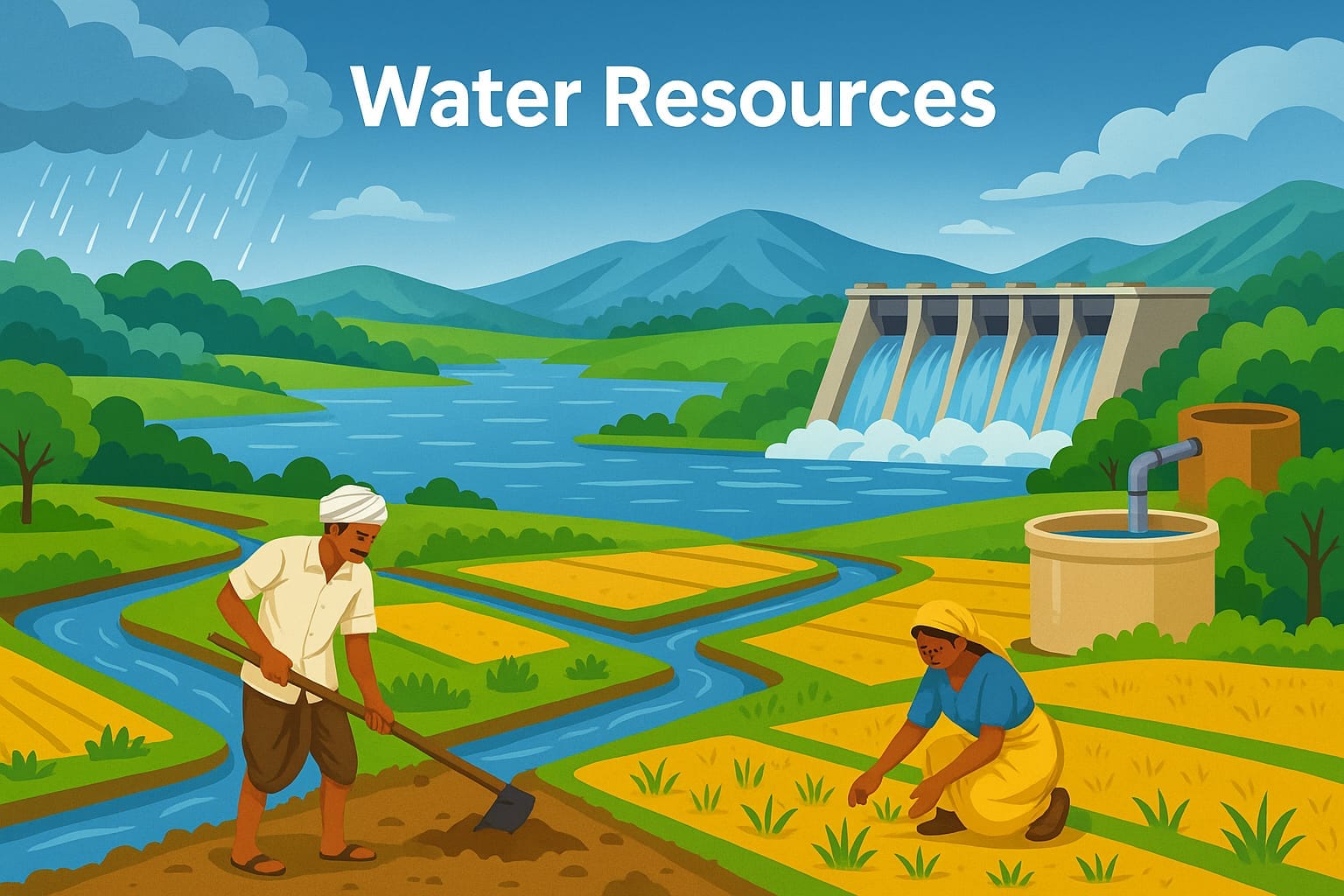
1. IMPORTANCE OF WATER
Water is the most essential natural resource for life on Earth. All plants, animals, and humans require water to survive. It helps maintain temperature, supports food production, enables chemical processes, and forms the base of ecological balance.
In India, water is important for:
Drinking: Clean water is needed for health and survival.
Agriculture: Irrigation is essential for crops like wheat, rice, cotton, and sugarcane.
Industries: Water is used for cooling, steaming, cleaning, and manufacturing goods.
Electricity: Hydroelectric power depends on flowing water.
Domestic Use: Cooking, bathing, cleaning, and sanitation.
Environment: Rivers, lakes, forests, and grasslands need water to function naturally.
Even though India receives high rainfall during monsoon, water scarcity exists because rainfall is uneven, seasonal, and varies regionally. Population growth and wastage also worsen the situation.
Beginner Explanation:
Water is needed for everything—food, electricity, industry, and life. If not used wisely, water becomes scarce.
2. WATER SCARCITY & ITS CAUSES
Water scarcity means lack of enough usable water to meet the needs of people, farms, and industries.
2.1 Major Causes of Water Scarcity
A. Rapid Population Growth
India’s population is increasing quickly. This increases the demand for:
Drinking water
Food production
Sanitation
Domestic and urban needs
Cities require huge amounts of water for homes, offices, hospitals, and cleaning.
Beginner Explanation:
More people → more water needed → shortage increases.
B. Industrialisation
Industries use water for:
Manufacturing
Cooling machines
Processing raw materials
Cleaning and washing
Industrial waste often goes into rivers, polluting freshwater.
Beginner Explanation:
Factories use lots of water and release dirty water, reducing clean water.
C. Agriculture (Biggest Water User)
Agriculture uses nearly 70% of India’s freshwater.
Problems:
Over-irrigation wastes water.
Water-intensive crops like sugarcane and paddy are grown in dry regions.
Tube wells extract groundwater rapidly.
Flood irrigation leads to runoff and evaporation.
Beginner Explanation:
Crops require water. Using too much water for crops reduces groundwater quickly.
D. Uneven Rainfall Distribution
Some regions receive very little rainfall:
Rajasthan
Gujarat
Marathwada
Bundelkhand
Other areas receive heavy rainfall:
Northeast India
Western Ghats
Beginner Explanation:
If a place hardly gets rain, it faces drought and water shortage.
E. Over-Exploitation of Groundwater
Groundwater is pumped faster than nature can refill it.
This causes:
Falling water table
Drying wells
Increased salinity
Beginner Explanation:
If you keep removing water from underground without letting it refill, it will finish.
F. Water Pollution
Water becomes polluted by:
Industrial waste
Domestic sewage
Chemical fertilizers
Plastics and garbage
Polluted water is unsafe for drinking and farming.
G. Climate Change
Climate change causes:
Irregular rainfall
Frequent droughts
Drying rivers
Changing monsoon patterns
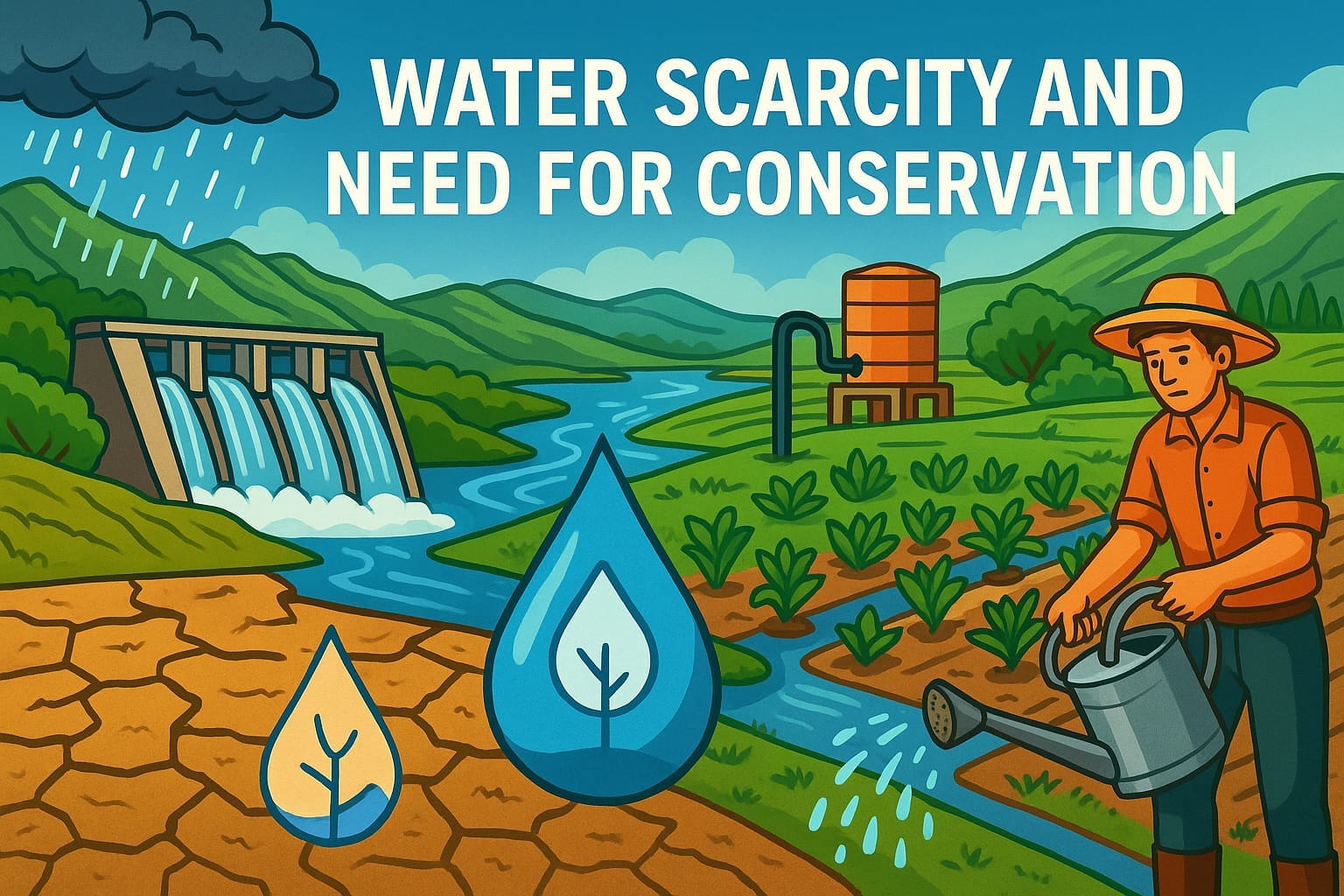
3. NEED FOR WATER CONSERVATION & MANAGEMENT
Water conservation means using water wisely and avoiding wastage
Reasons why conservation is important:
Freshwater availability is limited.
Increasing population increases demand.
Groundwater is depleting rapidly.
Agriculture requires large water supply.
Pollution reduces clean water sources.
Conflicts over water are rising.
Future generations need safe water.
Environmental protection requires sustainable water use.
Beginner Explanation:
We must save water now so that we have water in the future.
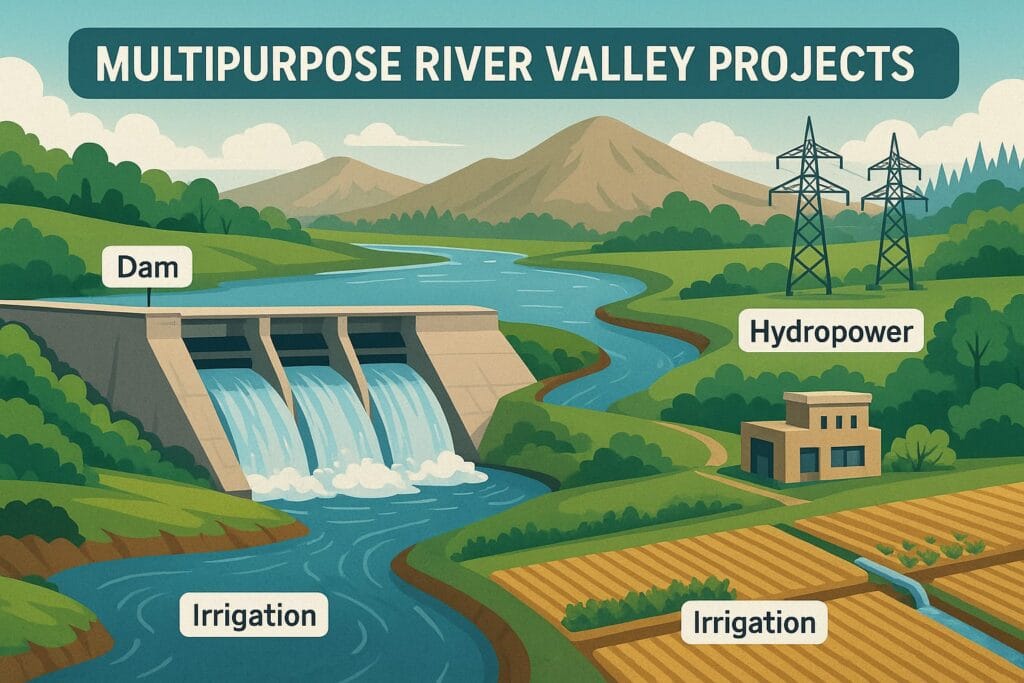
4. MULTI-PURPOSE RIVER VALLEY PROJECTS
Large dams that serve many functions are called multi-purpose river valley projects.
Examples:
Bhakra Nangal
Hirakud
Damodar Valley Project
Narmada Valley Project
Tungabhadra Project
4.1 Objectives
Multi-purpose projects help in:
Irrigation
Hydroelectric power
Flood control
Drinking water supply
Navigation
Fisheries
Soil conservation
Groundwater recharge
4.2 Advantages
Provides reliable irrigation
Produces clean renewable electricity
Controls floods
Supports drought-prone areas
Supports industries and urban development
4.3 Criticism of Large Dams
Environmental Issues
Deforestation
Loss of biodiversity
Disturbance of natural river flow
Siltation and waterlogging
Social Issues
Displacement of thousands of people
Loss of homes, farmlands, forests
Poor rehabilitation
Economic Issues
Very high construction cost
Long project delays
Unequal benefits among states
5. RAINWATER HARVESTING
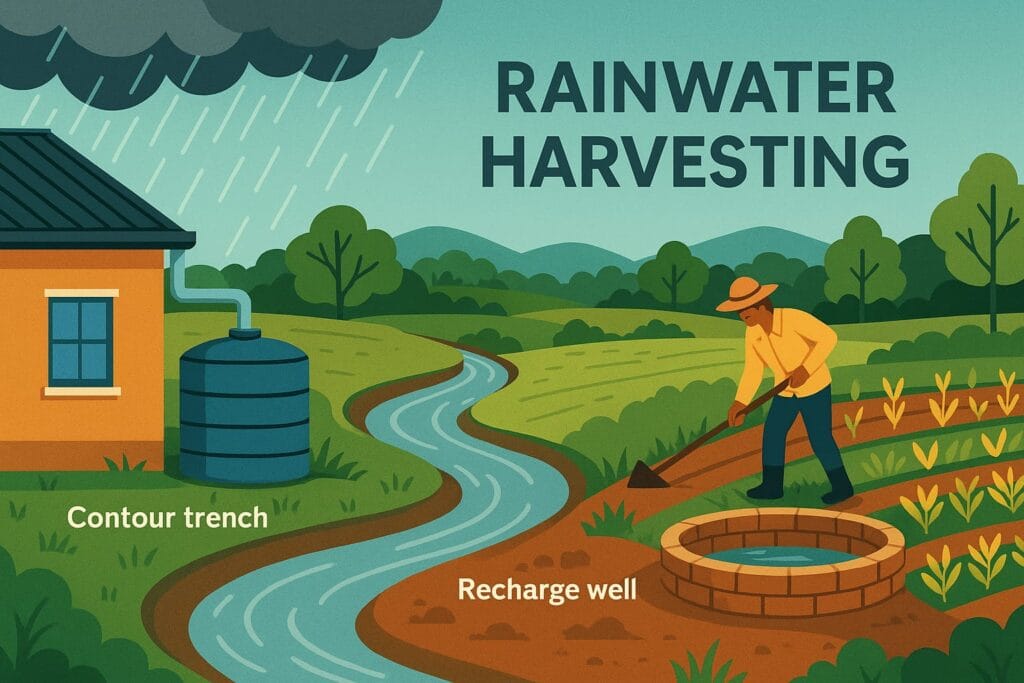
Rainwater harvesting means collecting and storing rainwater for future use.
Benefits:
Recharges groundwater
Reduces urban flooding
Provides clean water for households
Reduces pressure on dams and wells
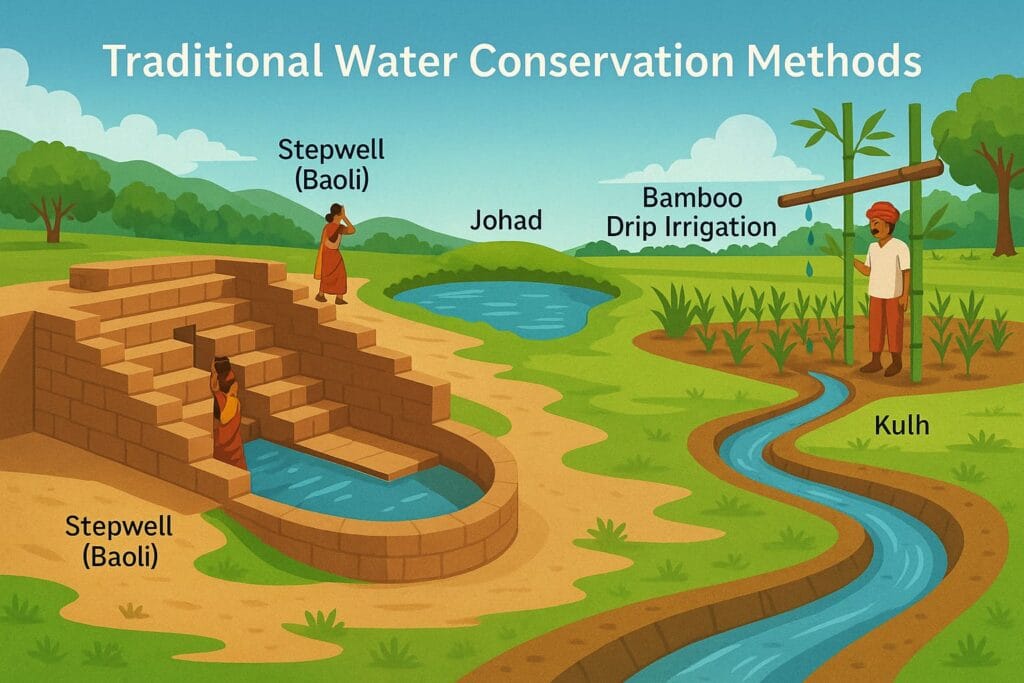
5.1 Traditional Rainwater Harvesting in India
India has developed smart water systems for centuries.
Rajasthan – Khadins, Johads, Tankas
Johads: earthen dams
Tankas: underground storage
Khadins: runoff farming system
Maharashtra – Bhandaras & Tals
Small storage barriers across streams.
Karnataka – Kattas
Temporary earthen structures.
Himachal Pradesh – Kulhs
Small channels carrying glacial water.
Tamil Nadu – Eris
Large tanks for storing rainwater.
Meghalaya – Bamboo Drip Irrigation
Water transported through bamboo pipes.
6. MODERN RAINWATER HARVESTING (URBAN)
Most popular method:
Rooftop Rainwater Harvesting
How it works:
Rain falls on rooftop
Pipes channel water
Water stored in tanks or recharge pits
Water filters into soil and increases groundwater
Benefits:
Cost-effective
Eco-friendly
Reduces urban flooding
Improves groundwater levels
Tamil Nadu made rooftop harvesting compulsory, resulting in major improvement in water table.
7. NEED FOR SUSTAINABLE WATER MANAGEMENT
Unsustainable use causes:
Falling groundwater
Dry rivers
Soil salinity
Water conflicts
Health issues
Sustainable Methods:
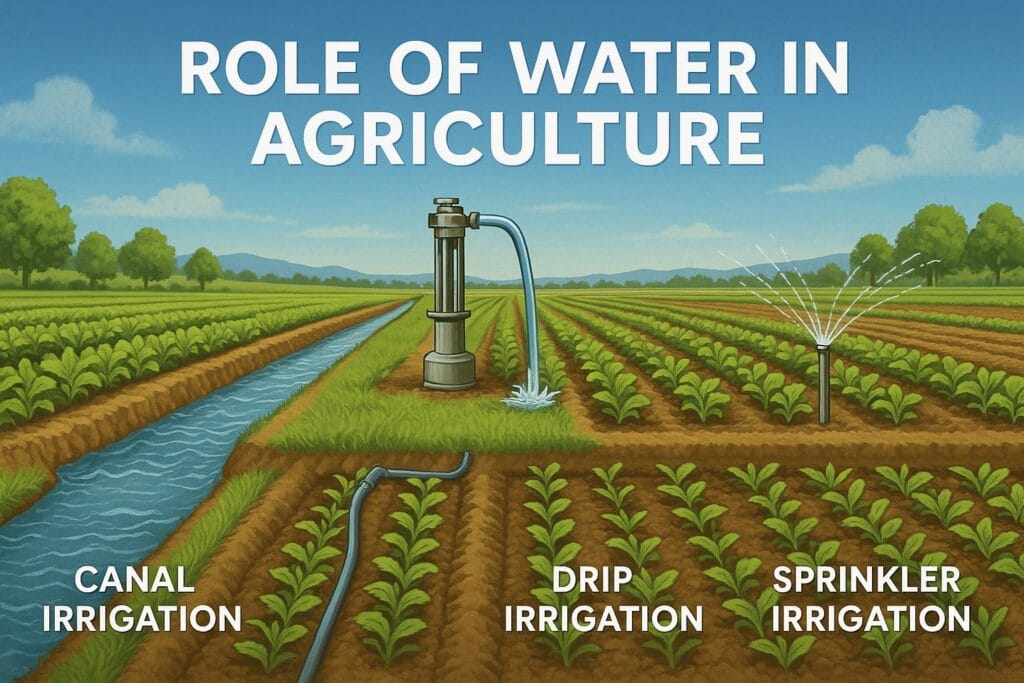
Drip and sprinkler irrigation
Recycling wastewater
Reducing pollution
Watershed management
Planting trees
Rainwater harvesting everywhere
Changing cropping patterns
8. CASE STUDIES
8.1 Nagaon, Rajasthan
Tankas store rainwater
Used throughout the year
Reduces long-distance water collection
8.2 Meghalaya Bamboo Drip Irrigation
Uses bamboo pipes
Water-saving, eco-friendly
Ideal for hilly terrain
8.3 Tamil Nadu Rainwater Harvesting
Compulsory rooftop harvesting
Groundwater increased
Reduced drinking water shortage
9. WATERSHED MANAGEMENT
A watershed is the area drained by a river and its tributaries.
Watershed management includes:
Check dams
Contour bunding
Planting trees
Stop overgrazing
Groundwater recharge
10. HYDEL POWER
Hydroelectricity is generated using the energy of falling or flowing water.
Advantages:
Renewable
Clean
Low operating cost
Disadvantages:
Submerges land
Displacement
Environmental damage
11. IMPORTANT TERMS
Water scarcity: lack of enough water
Multipurpose project: dam serving many uses
Rainwater harvesting: collecting rainwater
Watershed: drainage area of a river
Hydel power: electricity from water
Groundwater recharge: refilling underground water
12. HIGH-VALUE SUMMARY TABLE
This summary table helps students revise water resources class 10 notes quickly and score high marks.
| Topic | Key Points | Importance |
|---|---|---|
| Importance of Water | Life, agriculture, industries, electricity | Foundation of water resources class 10 notes |
| Water Scarcity | Caused by population, industry, pollution, climate | Central to water resources class 10 notes |
| Multipurpose Projects | Flood control, irrigation, power | Major part of water resources class 10 notes |
| Traditional Harvesting | Johads, tankas, kulhs | Scoring area in water resources class 10 notes |
| Sustainable Use | Drip irrigation, conservation | Final section in water resources class 10 notes |
Water Resources class 10 notes
FAQs
1. Why is water scarcity increasing in India?
Water scarcity is rising in India because water demand is increasing faster than water availability. Rapid population growth, urban expansion, and industrialisation are putting enormous pressure on rivers and groundwater. At the same time, rainfall is uneven and unpredictable due to climate change. Pollution from industries and untreated sewage further reduces the amount of clean, usable water.
Key Points:
Population rising, increasing demand
Over-extraction of groundwater
Uneven monsoon rainfall
Climate change causing droughts
Industrial waste polluting rivers
Agricultural over-irrigation and wastage
2. What are multipurpose river valley projects? Give examples.
Multipurpose river valley projects are large dams designed to perform several functions at once—irrigation, electricity generation, flood control, and water supply. They were created to support agriculture, control floods, and promote regional development. Many such projects became symbols of national progress after independence. However, they also cause displacement and environmental loss.
Key Points:
Built across rivers
Provide irrigation + hydropower
Control floods
Aid navigation & fisheries
Examples: Bhakra Nangal, Hirakud, Damodar Valley Project
3. What is rainwater harvesting and why is it important?
Rainwater harvesting means collecting rainwater and storing it for future use. It is extremely important because it reduces the burden on groundwater, provides a free source of clean water, and prevents urban flooding. In dry regions, it helps communities survive long summers. Rooftop harvesting is the most common method used in cities.
Key Points:
Collects rain from roofs/land
Stored in tanks or recharge pits
Improves groundwater level
Reduces floods & water scarcity
Low-cost and eco-friendly method
4. How do traditional rainwater harvesting systems work in India?
Traditional Indian harvesting systems were created based on local climate and geography. Communities built structures like johads, tankas, kulhs, and bamboo pipes to store or transport water. These systems required no modern technology and worked effectively for centuries. Even today, they inspire modern water-saving methods.
Key Points:
Rajasthan: Johads, tankas, khadins
Himachal: Kulhs (water channels)
Meghalaya: Bamboo drip irrigation
Tamil Nadu: Eris tank systems
Low-cost, eco-friendly, community-based
5. What is sustainable water management? Give methods.
Sustainable water management means using water in a way that meets present needs without harming future supply. It focuses on reducing wastage, protecting water bodies, and increasing groundwater recharge. With growing scarcity, these practices are essential for climate resilience and food security.
Key Points:
Use drip and sprinkler irrigation
Recycle industrial wastewater
Protect rivers from pollution
Promote rainwater harvesting everywhere
Increase forest cover
Efficient cropping patterns
MCQs
Water scarcity means:
A. Surface water increase
B. Less water than needed ✔️
C. Flooding
D. Salty waterOveruse of groundwater causes:
A. Rainfall increase
B. Water table fall ✔️
C. River floods
D. More lakesWhich crop needs maximum water?
A. Wheat
B. Sugarcane ✔️
C. Millets
D. CottonTankas are used in:
A. Kerala
B. Rajasthan ✔️
C. Punjab
D. BiharKulhs are found in:
A. Odisha
B. Himachal Pradesh ✔️
C. Gujarat
D. GoaHirakud Dam is on:
A. Krishna
B. Mahanadi ✔️
C. Yamuna
D. NarmadaMain user of freshwater:
A. Transport
B. Agriculture ✔️
C. Railway
D. TourismBamboo drip irrigation belongs to:
A. Sikkim
B. Meghalaya ✔️
C. Karnataka
D. TNWhich causes pollution?
A. Forests
B. Industrial waste ✔️
C. Mountains
D. PlainsMultipurpose dams help in:
A. Salinity
B. Hydropower ✔️
C. Pollution
D. ErosionRooftop harvesting mainly:
A. Increases evaporation
B. Recharges groundwater ✔️
C. Decreases soil
D. Stops windNarmada project is in:
A. Gujarat ✔️
B. Punjab
C. West Bengal
D. AssamJohads are:
A. Canals
B. Small check dams ✔️
C. Power stations
D. BridgesWater pollution reduces:
A. Salt
B. Clean water ✔️
C. Rocks
D. SoilOver-irrigation causes:
A. Floods
B. Salinity & waterlogging ✔️
C. Desert
D. LakesDrought occurs due to:
A. Snow
B. No rainfall ✔️
C. Fog
D. WindHigh industrial water use leads to:
A. Clean rivers
B. Dirty rivers ✔️
C. Glaciers
D. SoilHydel power uses:
A. Air
B. Water ✔️
C. Fire
D. WoodCanal irrigation comes from:
A. Wells
B. Dams ✔️
C. Oceans
D. StreamsWhich is NOT a benefit of dams?
A. Flood control
B. Irrigation
C. Hydropower
D. Forest growth ✔️Tamil Nadu promotes:
A. Desert forming
B. Compulsory harvesting ✔️
C. Lake draining
D. River miningWater table rises when:
A. Forests cut
B. Groundwater recharge ✔️
C. Roads built
D. Rocks erodeRainwater harvesting reduces:
A. Flooding ✔️
B. Snowfall
C. Storms
D. WindsDrought-prone region:
A. Meghalaya
B. Rajasthan ✔️
C. Goa
D. TNTraditional storage in Rajasthan:
A. Tanks
B. Tankas ✔️
C. Step wells
D. Towers
5-Marker Questions
Q1. Explain the major causes of water scarcity in India.
Water scarcity in India is caused by a combination of natural and human factors. Population growth increases domestic water demand, while industries consume huge quantities of water for manufacturing and cleaning. Agriculture uses nearly 70% of freshwater, often wastefully. Uneven rainfall and climate change worsen the situation. Pollution makes many rivers unfit for use, reducing available clean water.
Key Points:
Rapid population growth
Industrialisation demanding more water
Over-irrigation and water-intensive crops
Uneven rainfall distribution
Over-extraction of groundwater
Water pollution from industries & sewage
Climate change causing droughts
⭐ Q2. Describe multipurpose river valley projects and explain their benefits and problems.
Multipurpose river valley projects are large dams designed to meet many needs such as irrigation, electricity generation, flood control, and drinking water supply. They promote regional development and support agriculture. However, these projects also create major challenges including displacement of people, environmental destruction, and unequal distribution of benefits.
Benefits:
Irrigation for agriculture
Hydroelectric power generation
Reduction of flood damage
Drinking & industrial water supply
Soil conservation & fisheries development
Problems:
Displacement of villagers
Submergence of forests
Loss of biodiversity
Extremely high construction costs
Inter-state water disputes
⭐ Q3. Explain traditional rainwater harvesting systems in India with examples.
Traditional harvesting systems were developed in India based on local needs, climate, and geography. These systems collected rainwater, reduced dependence on rivers, and supported farming communities for centuries. They required no modern technology but were highly efficient and sustainable.
Examples:
Rajasthan: Johads (earthen dams), tankas (underground storage), khadins (runoff farming)
Himachal Pradesh: Kulhs to divert glacial water
Meghalaya: Bamboo drip irrigation
Tamil Nadu: Eris tank system
Maharashtra: Bhandaras and tals
Why important:
Low-cost
Eco-friendly
Community-managed
Highly effective in drought regions
⭐ Q4. What are the criticisms of large dams? Explain environmental, social, and economic issues.
Large dams, though beneficial, face several criticisms. From an environmental perspective, they destroy forests, disturb river flow, and cause loss of biodiversity. Socially, they displace thousands of people and disrupt communities. Economically, they require heavy investment and take years to build. Benefits are often unevenly distributed among states.
Key Points:
Environmental Issues:
Forest submergence
Loss of wildlife habitats
Siltation and river disturbance
Social Issues:
Displacement of tribal people
Loss of livelihood
Poor rehabilitation
Economic Issues:
High construction cost
Long delays
Unequal water sharing
⭐ Q5. Explain sustainable water management practices important for India’s future.
Sustainable water management ensures that water is used wisely, conserved properly, and protected from pollution. It is essential because India faces increasing water scarcity due to population growth and climate change. Sustainable practices help maintain groundwater levels, reduce wastage, and protect rivers.
Key Points:
Drip and sprinkler irrigation reduce wastage
Rainwater harvesting increases groundwater
Recycling industrial wastewater
Preventing river pollution
Protecting forests and watersheds
Changing cropping patterns to less water-intensive crops
Public awareness and government policies

Supportive Study Material Class 10 Science
- Class 10 Science Quiz
- Class 10 Science tests
- Class 10 Science Worksheets
- Class 10 Science PYQs
- Class 10 Science NCERT Solution