
Complete CBSE-Ready Money and Credit Class 10 Notes
(Avoid Common Mistakes)
1. Meaning of Money and Why It Is Important
Money is anything that people accept widely to buy goods, pay for services, settle debts, or save wealth. These Money and credit class 10 notes begin with understanding how money completely changed economic life.
Before money existed, people used the barter system, where they exchanged one good directly for another. This system created several challenges:
Why Barter System Failed (explained clearly)
No double coincidence of wants: Two people must want each other’s goods at the same time, which rarely happened.
No common value system: People could not easily decide how much rice equals how many shoes.
Storage problems: Goods like grains and animals could spoil, making long-term savings impossible.
Transportation difficulties: Large or bulky goods could not be easily moved for exchange.
Money solved all these issues by providing a universal medium of exchange, enabling smooth trade, saving, and investment — an important point in Money and credit class 10 notes.
2. Modern Forms of Money
Modern economies use two major forms of money today. These forms appear in many exam questions, so the Money and credit class 10 notes explain them deeply.
A. Currency (Cash)
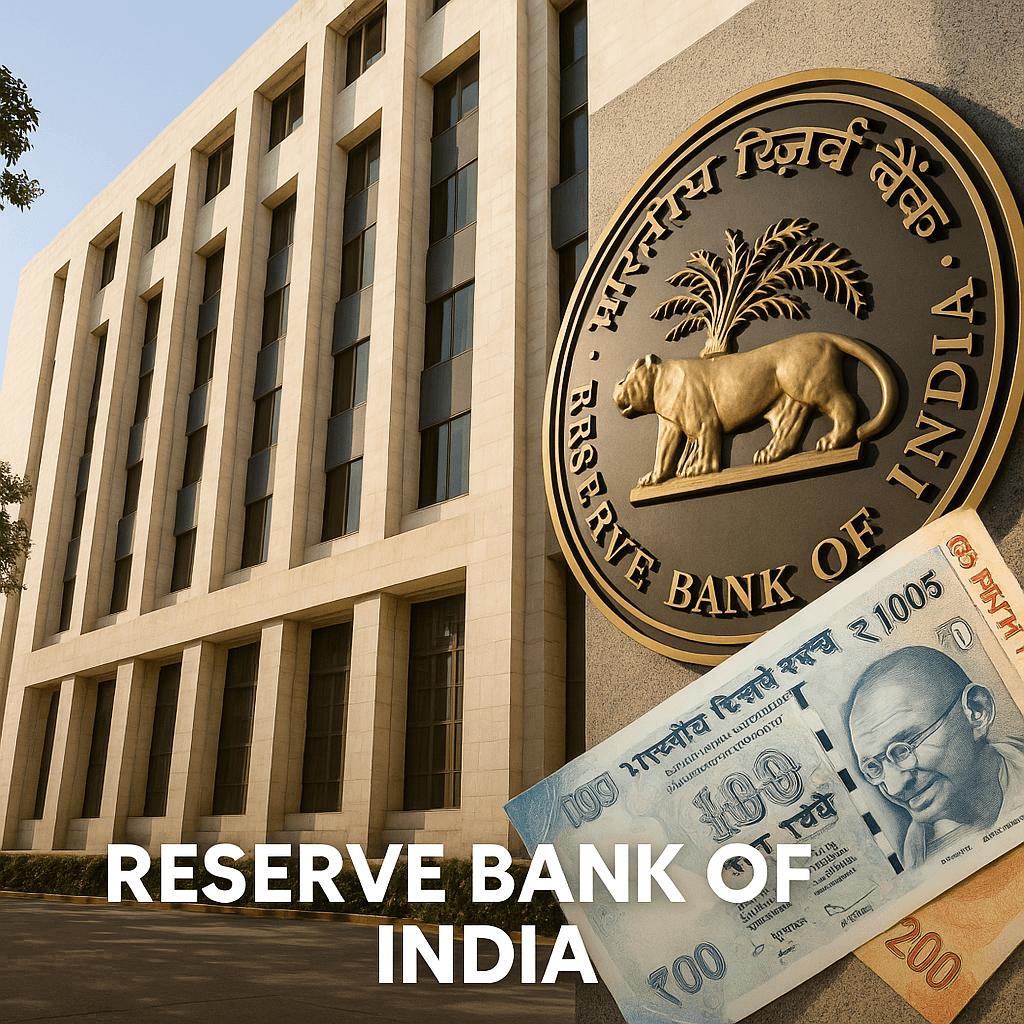
Currency refers to coins and paper notes issued by the Reserve Bank of India (RBI).
Key points (explained simply):
Currency is legal tender, meaning everyone must accept it as payment.
It cannot be refused in exchange for goods or services.
It is easy to carry, store, and use for daily transactions.
B. Bank Deposits (Most Modern Money)
A large portion of modern money exists as deposits in banks rather than physical cash.
Deposits act as money because:
They can be easily withdrawn through cheques, ATMs, UPI, or debit cards.
They are widely accepted for payments.
Banks provide interest, making deposits more valuable than cash.
Because of this, most economic transactions today use bank money — a very important point in the Money and credit class 10 notes.
Daily Update: Quizzes, Flashcards, Tests, Worksheets etc are shared .
Table 1: Comparison of Currency vs Deposits
| Feature | Currency | Bank Deposits |
|---|---|---|
| Form | Notes & coins | Digital entries in bank accounts |
| Issued by | RBI | Commercial banks |
| Safety | Can be lost/stolen | Safer, protected in banks |
| Income | No interest | Earns interest |
| Usage | Physical payments | UPI, cheques, cards |
3. Banks and Their Functions
Banks play a central role in the financial system. They collect deposits, provide loans, and support economic growth. A clear understanding of banks is essential for mastering Money and credit class 10 notes.
3.1 Deposits (Savings of People)
People deposit money in banks for safety, interest, and convenience.
Types of deposits:
Savings Deposits: Small deposits with moderate interest, widely used by households.
Fixed Deposits: High-interest deposits locked for a long period.
Current Deposits: Used by businesses; allows frequent transactions.
The key benefit explained in these Money and credit class 10 notes is that deposits help people store wealth safely.
3.2 Lending (Loans Provided by Banks)
Banks do not keep all deposits in cash. They keep only a small portion (known as the Cash Reserve Ratio) and lend the rest.
This process is called credit creation, where banks multiply money by giving loans to the public. It increases overall money supply in the economy, which is an important exam point in Money and credit class 10 notes.
4. Loans and Credit
A loan is borrowed money that must be repaid with interest. Credit can be helpful or harmful depending on how it is used — a core idea in the Money and credit class 10 notes.
4.1 Terms of Credit
All loans contain specific terms such as:
Interest rate: Extra money paid on the principal amount.
Collateral: Asset used as security for the loan.
Time period: Duration to repay the loan.
Documentation: Identity proof, income proof, etc.
Mode of repayment: Monthly instalments or bullet repayment.
These terms protect both borrower and lender.
5. Formal vs Informal Credit Sources
In India, credit comes from two sectors. The Money and credit class 10 notes provide a detailed and student-friendly comparison.
A. Formal Credit Sector
Includes:
Banks
Cooperatives
Government lending institutions
Features of formal credit:
Regulated by RBI
Reasonable interest
Clear, transparent terms
Proper documents needed
Collateral often required
Advantages:
Protects borrowers from exploitation
Encourages productive use
Safer and more reliable
B. Informal Credit Sector
Includes:
Moneylenders
Traders
Relatives
Landlords
Shopkeepers
Problems in informal credit:
No RBI control
Very high interest rates
Unfair recovery practices
No fixed rules
Can trap people in debt cycles
This contrast is vital for scoring in exams and is highlighted repeatedly in Money and credit class 10 notes.
Table 2: Formal vs Informal Credit
| Feature | Formal Credit | Informal Credit |
|---|---|---|
| Regulation | RBI controlled | No regulation |
| Interest | Low & fixed | High & flexible |
| Collateral | Usually required | Sometimes not needed |
| Transparency | Full documentation | No transparency |
| Safety | Very safe | Risky & exploitative |
| Accessibility | Harder for poor | Easier for poor |
6. Positive and Negative Effects of Credit
A. Positive Effects
When used wisely, loans help people grow economically.
Examples:
A farmer buys better seeds → increases production.
A shopkeeper buys new stock → earns more profit.
A student takes an education loan → builds a career.
This is a major learning objective in Money and credit class 10 notes.
B. Negative Effects
When people borrow during emergencies or from informal sources:
Interest becomes too heavy
Repayment becomes difficult
Collateral like land/houses may be lost
Borrowers fall into long-term indebtedness
Thus, loans must be taken with proper planning.

7. Self-Help Groups (SHGs)
Self Help Groups (SHGs) are small groups of 15–20 rural women who come together to save money, provide small loans to each other, and support each other financially.
They help people, especially the poor, who cannot get loans from banks due to lack of collateral.
Why SHGs Form?
Poor households need small and timely loans.
Banks usually demand collateral, documents, and guarantees.
Moneylenders charge very high interest rates.
→ SHGs provide a safe, low-interest, trust-based borrowing option.
How SHGs Work
Members save small amounts regularly (₹25–₹100 per month).
This money is pooled into a common fund.
Members take small loans from this fund for emergency needs like:
medical issues
education
repairing house
buying seeds/fertilizer
Interest is very low and decided by the group.
After a few years of disciplined saving, SHGs become eligible for bank loans.
Benefits of SHGs
Empowers rural women by giving them financial independence.
Reduces dependency on moneylenders.
Creates habit of saving and responsible borrowing.
Helps women start small businesses — stitching, farming, craft, shops etc.
Makes them confident in social and financial matters.
Why SHGs Are Important (NCERT main point)
SHGs help in solving the problem of poor people’s non-availability of credit, promote self-employment, and improve the economic & social status of women.
Why SHGs Are Important (Explained clearly)
Provide cheap and quick credit
No collateral required
Encourage savings and financial discipline
Reduce dependence on moneylenders
Support small businesses
Improve women’s social and economic status
Help members get bank loans easily after establishing trust
SHGs are a very important part of Money and credit class 10 notes, especially for 3–5 mark questions.
8. Role of RBI (Reserve Bank of India)
RBI controls and supervises all banks in India.
Functions of RBI
Issues currency notes
Decides interest rates
Ensures fair loan practices
Monitors banks’ cash reserves
Controls money supply
Prevents exploitation of borrowers
Ensures financial discipline
Understanding RBI is crucial in Money and credit class 10 notes.
Table 3: Functions of RBI
| Function | Explanation |
|---|---|
| Currency Issuer | Prints and circulates Indian currency |
| Bank Supervisor | Keeps watch on all banks |
| Regulates Interest | Controls bank lending rates |
| Controls Credit | Manages money supply |
| Ensures Safety | Prevents fraud and exploitation |
9. Credit and Rural Development
Credit supports rural growth by:
Helping farmers buy seeds, equipment, and fertilizers
Supporting dairy, poultry, and fisheries
Creating small rural businesses
Reducing poverty
Generating employment
Because of this, Money and credit class 10 notes emphasise the need for expanding formal credit in villages.
10. Key Terms (Explained Simply)
Barter system: Goods exchanged without money.
Collateral: Property kept as security for a loan.
Interest: Extra money paid on borrowed amount.
Formal sector: Banks and cooperatives under RBI.
Informal sector: Unregulated lenders like moneylenders.
SHG: Group promoting savings and cheap credit.
Credit: Borrowing money to repay later with interest.
Summary
Money replaced the inefficient barter system.
Modern money exists as currency and bank deposits.
Banks keep deposits, provide loans, and create credit.
Credit can help or harm depending on conditions.
Formal credit is safe; informal credit is risky.
SHGs empower rural people, especially women.
RBI monitors all banks and maintains economic stability.
Credit supports rural growth and overall development.
Money and credit class 10 notes
FAQs
1: Why is money preferred over barter?
Money is preferred over barter because it removes the problem of double coincidence of wants. When money is used, people can sell their goods to anyone and buy whatever they need later. Money also provides a common measure of value, making price comparison easy. It can be saved, stored, and used anytime without losing value. Unlike grains or animals, money does not spoil and is easy to transport. This makes trade faster, easier, and more convenient compared to the barter system.
2: How do banks create credit?
Banks create credit by keeping only a small portion of deposits as cash and lending out the rest. Suppose a bank receives ₹10,000; it keeps ₹1,000 as reserve and loans ₹9,000 to others. The borrower uses this money for payments, which again gets deposited into the banking system. This cycle continues, and the bank multiplies the original deposit many times. This process increases the total money supply in the economy and is called credit creation. It helps businesses, farmers, and consumers access funds easily.
3: Why do poor people depend more on informal credit?
Poor people depend on informal credit because moneylenders, traders, and landlords give loans without asking for documents or collateral, making borrowing easy. Formal institutions like banks require identity proof, income records, and property papers, which poor people often lack. Moreover, banks may take time to process loans, while informal lenders provide instant cash. However, informal credit is risky because interest rates are very high, and borrowers may fall into debt traps. Therefore, expanding formal credit is essential for helping poor families.
4: How do Self-Help Groups (SHGs) support rural development?
Self-Help Groups support rural development by giving cheap and easily accessible loans to poor families, especially women. Members save small amounts regularly and use this pooled money for lending within the group. SHGs also help women start micro-businesses such as stitching, dairy, poultry, tailoring, and food processing. After building trust, banks give larger loans to SHGs, improving financial independence. SHGs reduce dependence on moneylenders, encourage teamwork, and improve confidence among rural women, making them important agents of village development.
5: Why is RBI supervision important?
RBI supervision is important because it protects depositors’ money and ensures fair lending practices. RBI checks whether banks keep enough cash reserve, follow correct interest rates, and provide loans transparently. Without RBI supervision, banks might charge unfair rates or misuse public money, harming customers. RBI also controls inflation by regulating money supply. By monitoring every bank in India, RBI ensures financial stability, prevents fraud, and maintains trust in the banking system, which is essential for smooth economic functioning.
MCQs
Q1. What is the primary function of money?
a) Storing crops
b) Medium of exchange
c) Providing loans
d) Measuring land
Answer: b) Medium of exchange
Q2. Which institution issues currency in India?
a) SBI
b) RBI
c) Ministry of Finance
d) SEBI
Answer: b) RBI
Q3. Which of the following is NOT a modern form of money?
a) Cheque
b) UPI
c) Gold coins
d) ATM
Answer: c) Gold coins
Q4. Term “credit creation” is related to—
a) Moneylenders
b) Banks
c) Shopkeepers
d) Post Office
Answer: b) Banks
Q5. Which loan source is regulated by RBI?
a) Friends
b) Moneylender
c) Cooperative bank
d) Relatives
Answer: c) Cooperative bank
Q6. Collateral means—
a) Extra tax
b) Asset kept as security
c) Free money
d) Monthly salary
Answer: b) Asset kept as security
Q7. Formal credit includes—
a) Landlords
b) Traders
c) Banks
d) Shopkeepers
Answer: c) Banks
Q8. Informal credit is considered harmful because—
a) It requires documents
b) It charges low interest
c) It is unregulated
d) It gives no loans
Answer: c) It is unregulated
Q9. SHGs are mostly formed by—
a) Men
b) Women
c) Bank officials
d) Traders
Answer: b) Women
Q10. Which sector provides the highest number of informal loans?
a) Banks
b) Moneylenders
c) Insurance
d) Transport
Answer: b) Moneylenders
Q11. RBI supervises—
a) Small shops
b) Banks
c) Factories
d) Schools
Answer: b) Banks
Q12. A loan becomes harmful when—
a) Interest is low
b) Borrowed from banks
c) Borrower cannot repay
d) Borrower uses it productively
Answer: c) Borrower cannot repay
Q13. Which method is used to withdraw deposits?
a) Hammer
b) Cheque
c) Crane
d) Tractor
Answer: b) Cheque
Q14. UPI stands for—
a) Unified Payments Interface
b) Union Payment International
c) Universal Pay Institute
d) United People of India
Answer: a) Unified Payments Interface
Q15. Which feature is true for formal credit?
a) High interest
b) No rules
c) Legal and regulated
d) Random terms
Answer: c) Legal and regulated
Q16. One major advantage of SHGs is—
a) High loan interest
b) No meetings
c) No collateral
d) Loans only for rich
Answer: c) No collateral
Q17. A bank keeps a part of deposits as—
a) Jewellery
b) Cash reserve
c) Gold
d) Land
Answer: b) Cash reserve
Q18. Who supervises credit activities?
a) Municipal Corporation
b) RBI
c) TRAI
d) SEBI
Answer: b) RBI
Q19. Informal loans often cause—
a) Profit
b) Debt trap
c) Savings
d) Development
Answer: b) Debt trap
Q20. Money and Credit Chapter belongs to which subject?
a) History
b) Geography
c) Economics
d) Civics
Answer: c) Economics
5-Marker Questions
Q1. Explain the role of credit in economic development. How can credit be both helpful and harmful?
Credit plays a crucial role in economic development because it helps individuals, farmers, businesses, and industries access money when they need it the most. When used properly, credit becomes a powerful tool for increasing income and raising living standards.
Helpful Effects of Credit
Supports productive activities: Farmers can buy high-quality seeds, fertilizers, and machinery, increasing crop yield.
Encourages business expansion: Small shopkeepers can purchase new stock and generate higher profits.
Improves standard of living: People can buy houses, vehicles, or pay for education through loans.
Creates employment: When businesses grow using loans, they hire more workers.
Strengthens rural economy: Affordable credit helps non-farm activities like dairy, poultry, fisheries.
Harmful Effects of Credit
High interest burden: If the borrower fails to repay on time, interest keeps increasing.
Debt trap: In informal loans, people borrow again to repay earlier loans, leading to endless debt.
Loss of collateral: Borrowers may lose land, gold, or property if they cannot repay.
Stress and insecurity: Families face financial pressure due to mounting repayments.
Thus, credit is beneficial when used wisely and risky when taken under unfavourable conditions.
Q2. Compare formal and informal credit sources. Why is it important to increase formal credit in rural areas?
Formal and informal credit systems differ in rules, interest rates, and borrower protection. Increasing formal credit in rural areas is essential for reducing exploitation.
Comparison of Sources
Regulation:
Formal credit is supervised by the RBI.
Informal credit has no supervision, leading to unfair practices.
Interest Rates:
Formal loans have lower, fixed interest rates.
Informal lenders charge very high interest, sometimes 5–10 times more.
Collateral & Documents:
Formal institutions require proper documents and collateral.
Informal lenders may not require documents but exploit borrowers.
Safety:
Formal loans are safe and transparent.
Informal loans can lead to harassment and confiscation of property.
Why Rural Areas Need Formal Credit
To reduce dependency on moneylenders who trap people in debt cycles.
To support agriculture, which needs large investment in seeds, irrigation, and machinery.
To promote small rural businesses, increasing income and jobs.
To improve living standards by making education and healthcare affordable.
To empower women through SHGs linked to banks.
Thus, expanding formal credit is essential for rural development and financial stability.
Q3. What are Self-Help Groups (SHGs)? How do they empower poor women in rural areas?
SHGs are small groups of 10–20 members, mostly women, who pool their savings and give loans to each other at low interest. SHGs have transformed rural communities by offering accessible and affordable credit.
How SHGs Work
Members save small amounts regularly.
Group decides loan terms collectively.
No collateral is required.
After 1–2 years, banks provide larger loans to the SHG.
How SHGs Empower Women
Financial independence: Women need not depend on moneylenders or family members for loans.
Regular savings habit: Small weekly savings develop financial discipline.
Employment creation: Women start small businesses like tailoring, poultry, papad-making, stitching, food stalls.
Decision-making power: Women participate in financial and household decisions.
Social empowerment: Women gain confidence and respect in society.
SHGs are one of the most successful rural development strategies and appear frequently in exams.
Daily Update: Quizzes, Flashcards, Tests, Worksheets etc are shared .
Supportive Study Material Class 10 Science
- Class 10 Science Quiz
- Class 10 Science tests
- Class 10 Science Worksheets
- Class 10 Science PYQs
- Class 10 Science NCERT Solution