Complete CBSE-Ready Development Class 10 Notes
(Avoid Common Mistakes)
The chapter Development Class 10 Notes helps us understand how people improve their lives, how countries progress, and how development must balance income, equality, health, environment and long-term sustainability. Development is a multi-dimensional process involving social, economic, cultural and environmental aspects that raise the overall quality of life for individuals and communities.
Daily Update: Quizzes, Flashcards, Tests, Worksheets etc are shared .
1. Meaning of Development
Development refers to improvement in the living conditions of people. It includes better income, higher quality education, improved health facilities, job opportunities, security and freedom to make life choices. Development Class 10 Notes emphasise that development is not only about wealth but also about dignity, equality and opportunities.
Different People, Different Goals
People’s backgrounds shape what they consider development.
A farmer may prioritise irrigation, land security and fair crop prices.
A student may aim for quality education, good teachers and future employment opportunities.
A worker may value safety at the workplace, stable wages and job protection.
A businessman may seek profitable markets, infrastructure and low taxes.
Marginalised groups want equality, respect, non-discrimination and social justice.
Why Goals Differ
Not everyone has the same needs or priorities. Therefore, development cannot have a single definition.
2. Development Goals: Different and Conflicting
People often have different and sometimes conflicting goals. In Development Class 10 Notes, these conflicts show how development impacts groups differently.
Examples of Conflicting Goals
A factory owner wants lower wages to increase profit, but workers want higher wages for better living.
Industries want large dams to get electricity, but tribal families may get displaced from their homes.
Urban citizens want broader roads for smooth traffic, but shopkeepers may lose their shops due to expansion.
A mining company wants land for mining, but farmers may lose agricultural fields.
These conflicts show that development should consider all stakeholders and aim for fairness.
3. Income and Other Goals
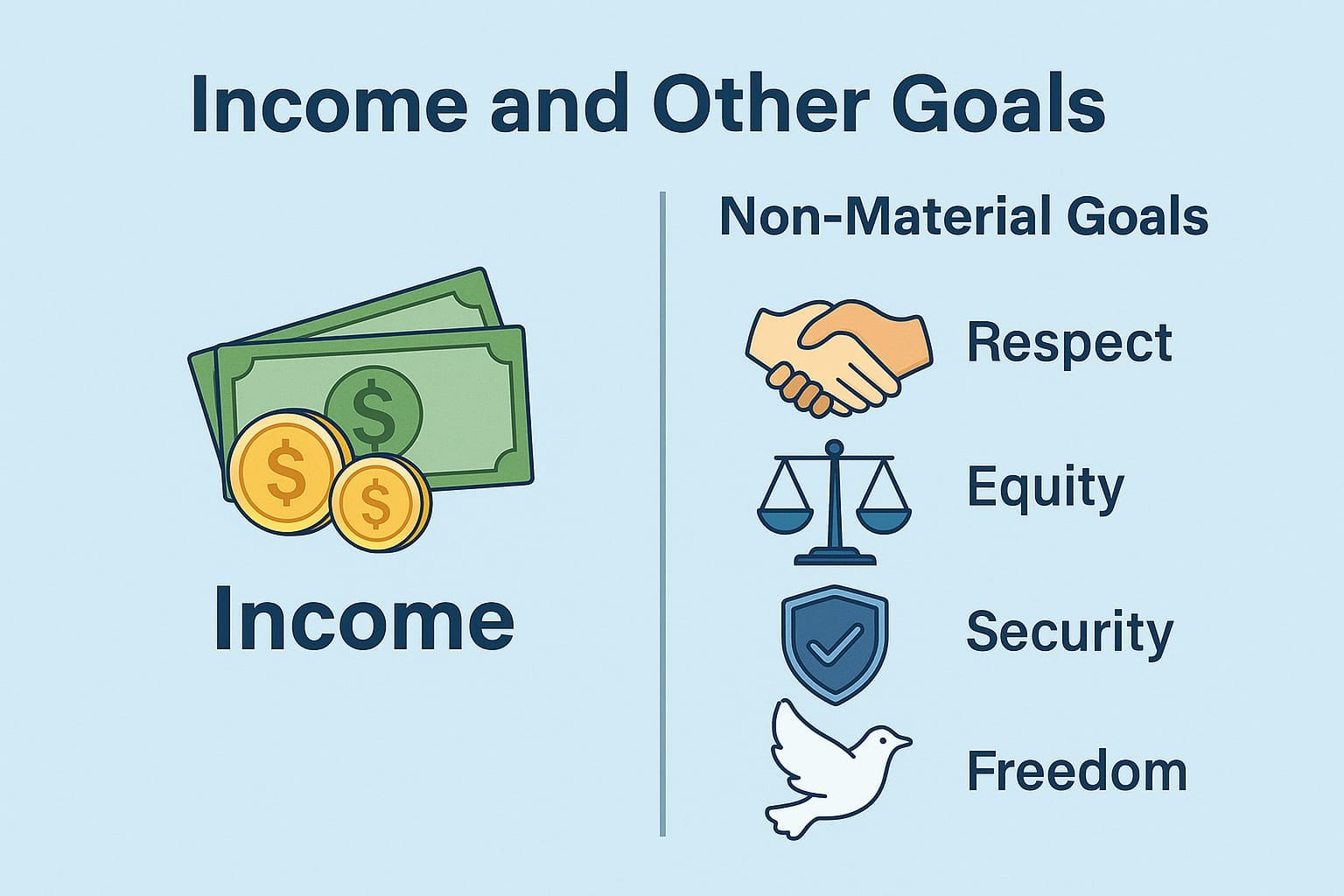
Income is important because it helps fulfill basic needs like food, shelter and clothing. But Development Class 10 Notes highlight that income alone does not guarantee a good life.
Non-Material Goals (Other Important Goals)
People also value:
Respect: Being treated equally and with dignity.
Security: Feeling safe from violence, exploitation and discrimination.
Freedom: Ability to choose career, lifestyle and opinions freely.
Equality: Fair treatment without gender, caste or economic bias.
Healthy environment: Clean air, safe drinking water and pollution-free surroundings.
Decent working conditions: Jobs that ensure safety and mental well-being.
Social acceptance: Ability to live without fear or prejudice.
Example
A high-paying job with no job security or respect is less desirable than a moderate-paying job with safety, respect and growth.
Thus, development includes both material and non-material aspects.
4. National Development
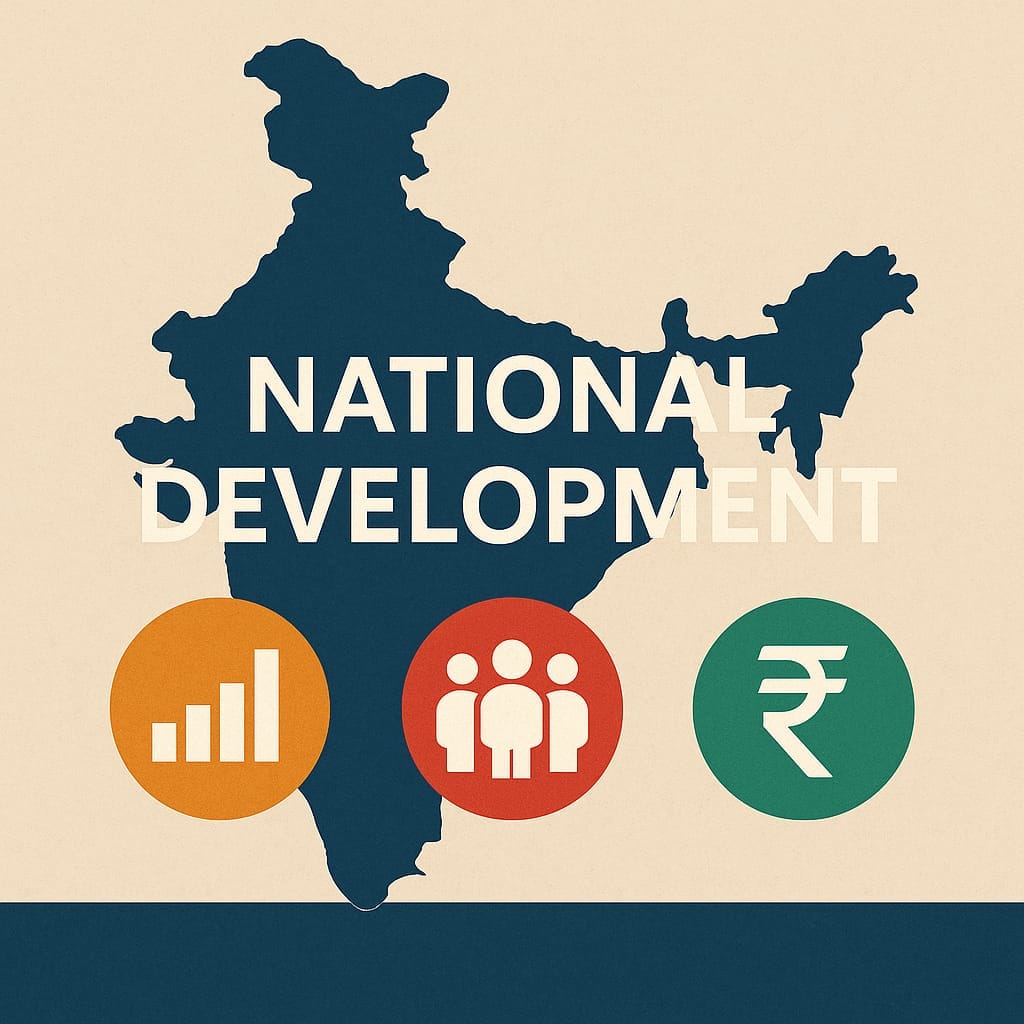
National development refers to the improvement of a country in social, economic, political and cultural fields. Development Class 10 Notes emphasise that national development depends on how resources are used and how benefits are distributed.
Indicators of National Development
Economic growth: Increase in national income and production.
Better education: Higher literacy rates and better schooling.
Improved health: Access to hospitals, doctors and better healthcare.
Social equality: Reduction of poverty, discrimination and inequality.
Infrastructure growth: Roads, electricity, transport and communication facilities.
Environmental sustainability: Protection of forests, water, air and natural resources.
Political stability: Good governance, justice and rule of law.
Different countries may progress differently based on priorities and availability of resources.
🟩 TABLE 1 – Economic vs. Non-Economic Indicators
| Indicator Type | Examples | Importance |
|---|---|---|
| Economic | Income growth, GDP | Measures financial strength |
| Social | Literacy, healthcare | Shows quality of life |
| Environmental | Pollution levels | Shows sustainability |
5. How Do We Compare Countries?
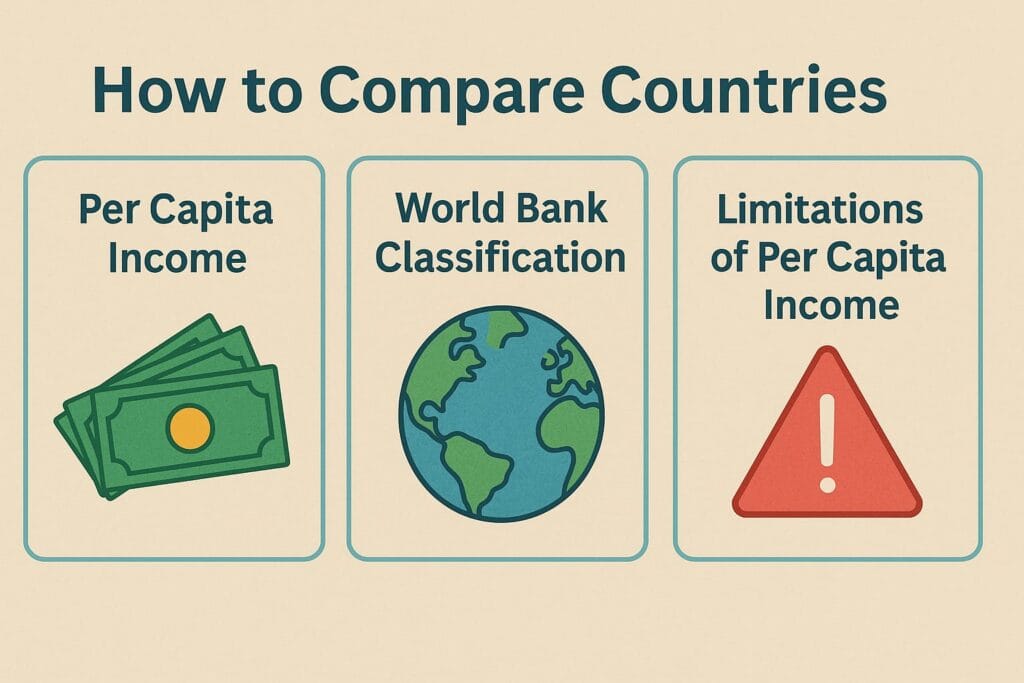
To compare countries, we use various development indicators. The most common indicator is per capita income, also called average income.
5.1 Per Capita Income
Per Capita Income=Total Population/Total Income of Country
Key Points
Shows average income per person.
Countries with higher per capita income are considered more developed.
Used by World Bank to classify nations.
World Bank Classification (Broad Categories)
Low-income: Less than ₹1,00,000 per year
Middle-income: ₹1,00,000 to ₹12,00,000
High-income: Above ₹12,00,000
India falls in the middle-income group.
5.2 Limitations of Per Capita Income
Per capita income alone is not enough to measure development.
Limitations
Hides inequality: Few rich people can raise average income even if most are poor.
Ignores health and education: Does not show literacy rate, life expectancy or medical access.
Environmental factors ignored: Pollution levels and resource use do not appear in income data.
No measure of safety or freedom: Social issues and rights are not captured.
Thus, per capita income is only one dimension of development.
Daily Update: Quizzes, Flashcards, Tests, Worksheets etc are shared .
6. Human Development Indicators
Development means improving overall quality of life. Development Class 10 Notes include various indicators beyond income.
6.1 Education Indicators
Literacy rate: Percentage of people who can read and write.
Enrollment ratio: Number of children enrolled in school compared to eligible population.
Attendance rate: Number of students regularly attending school.
Educational levels: Primary, secondary and higher education availability.
Education helps reduce poverty and improves job opportunities.
6.2 Health Indicators
Life expectancy: Number of years a newborn is expected to live.
Infant Mortality Rate (IMR): Number of infants dying before age one per 1,000 births.
Child nutrition: Shows quality of food and health facilities.
Availability of doctors: Reflects healthcare access.
Low IMR and high life expectancy show high development.
6.3 Public Facilities
Public facilities are services provided by the government for people’s welfare.
Examples
Schools, colleges and universities
Hospitals and medical centres
Public transport and roads
Safe drinking water supply
Sanitation and sewage system
Electricity access
Community parks and housing schemes
Public facilities improve living standards for all, especially the poor.
6.4 Net Attendance Ratio
ercentage of children attending school out of total eligible children.
Higher attendance means better educational development.
🟩 TABLE 2 – Education vs. Health Indicators
| Indicator | What It Shows | Why Important |
|---|---|---|
| Literacy Rate | Ability to read/write | Better jobs |
| Life Expectancy | Average lifespan | Better healthcare |
| IMR | Infant survival rate | Quality of health system |
| Enrollment | School participation | Future workforce |
7. Human Development Index (HDI)
HDI is a global development measure created by the UNDP (United Nations Development Programme).
It gives a more complete picture of development than income alone.
HDI Measures
Income: Per capita income
Education: Literacy + years of schooling
Health: Life expectancy
HDI Scores
Ranges between 0 and 1
Closer to 1 = highly developed
Below 0.5 = low development
HDI is considered more reliable because it includes social and health indicators.
Daily Update: Quizzes, Flashcards, Tests, Worksheets etc are shared .
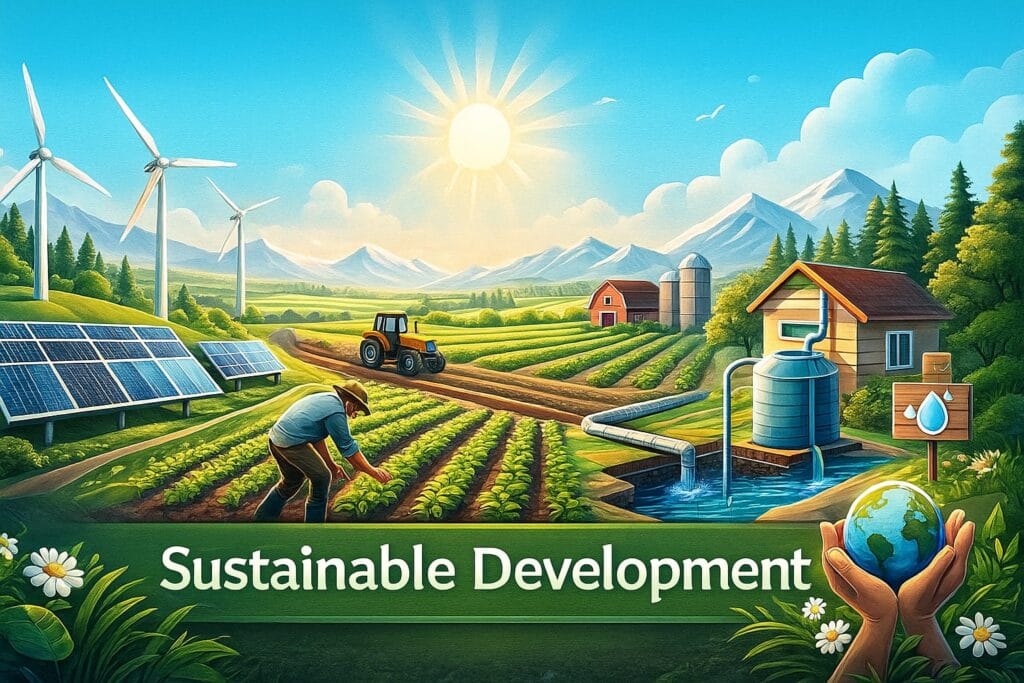
8. Sustainable Development
Sustainable development means using resources responsibly so future generations can also use them.
Principles of Sustainable Development
Reduce pollution and waste
Conserve forests, water and minerals
Use renewable resources like solar and wind
Avoid overuse of groundwater
Promote recycling and eco-friendly production
Protect biodiversity
Reduce greenhouse gases
Sustainability ensures long-term development without harming nature.
9. Environment and Development
Sometimes development harms the environment if not managed carefully.
Environmental Problems
Excessive use of groundwater reduces water table
Deforestation destroys habitats and causes soil erosion
Air pollution from industries causes diseases
Water pollution harms aquatic life
Climate change due to greenhouse gases
Loss of biodiversity reduces ecological balance
Development Class 10 Notes emphasise balanced growth to protect both economy and environment.
10. Renewable and Non-Renewable Resources
Non-Renewable Resources
These resources take millions of years to form and cannot be replaced quickly.
Coal
Petroleum
Natural gas
Minerals
Renewable Resources
Resources that can be renewed naturally if used responsibly.
Solar energy
Wind energy
Hydro power
Forests (if protected)
Renewable resources support sustainable development.
11. Development and Resource Use
For long-term progress, countries must use resources wisely.
Goals for Balanced Development
Fair distribution of income among people
Efficient use of resources
Equal access to education and health
Economic growth without harming nature
Development opportunities for all communities
Countries must plan policies that protect nature while improving people’s lives.
12. Important Terms
Per capita income: Average income per person
National development: Improvement in all sectors of a country
HDI: Human Development Index
Sustainable development: Development that protects future resources
Life expectancy: Number of years a person is expected to live
IMR: Infant mortality rate
Public facilities: Government services like hospitals and schools
13. Summary
Development includes income, education, health, security and equality.
Different people have different development goals.
Per capita income helps compare countries but has limitations.
HDI gives a better understanding of development.
Sustainable development protects resources for future generations.
Public facilities are essential for improving living standards.
Balanced growth ensures fairness and environmental protection.
Development Class 10 Notes Complete Guide for 95+ Marks
FAQs
1: Why is development considered a multi-dimensional concept?
Development is multi-dimensional because it includes improvements in income, education, healthcare, equality, safety and quality of life, not just economic growth. In Development Class 10 Notes, development also includes social justice, gender equality, environmental protection and opportunities for every individual. A country may have high income but poor health or education, which means development is incomplete. True development balances economic progress with human well-being and sustainability.
2: What is the difference between income goals and non-material goals?
Income goals refer to financial benefits such as higher salary, profits or economic stability. Non-material goals include respect, dignity, equality, safety, job security and a clean environment. Development Class 10 Notes clearly show that people value both types of goals because income alone cannot ensure a good life. Even a high-paying job may not be desirable if it lacks respect or safety. Therefore, development must balance material and non-material aspects.
3: What are the limitations of using per capita income to compare countries?
Per capita income hides the unequal distribution of wealth within a country. A few rich individuals can raise average income even if many people remain poor. Development Class 10 Notes explain that it also ignores education levels, health conditions, safety, literacy rate, social equality and environmental quality. It does not measure whether people are living happily or securely. Therefore, using only per capita income gives a partial and misleading picture of development.
4: Why is HDI considered a better measure than per capita income?
HDI is better because it includes three key dimensions: income, health (life expectancy) and education (literacy and years of schooling). Development Class 10 Notes highlight that per capita income alone ignores inequalities and non-economic aspects. HDI focuses on the actual living conditions of people and not just wealth. It helps compare how countries perform in real human welfare, making it more comprehensive and reliable.
5: What is sustainable development and why is it important?
Sustainable development means fulfilling current needs without harming the ability of future generations to meet theirs. It encourages responsible use of resources, reducing pollution, conserving forests and promoting renewable energy. Development Class 10 Notes emphasise that without sustainability, natural resources like water, forests and minerals will get depleted. This leads to environmental damage, climate change, and long-term economic decline. Therefore, sustainability ensures balanced growth for present and future generations.
6: How does the environment get affected by development activities?
Development activities such as industrial growth, urbanisation, and increasing consumption often damage the environment. Overuse of groundwater lowers the water table, pollution from factories harms air and water quality, and deforestation reduces biodiversity. Development Class 10 Notes explain that resource exploitation leads to soil erosion, climate change and loss of species. Without proper planning, development becomes harmful, creating long-term risks for human health and ecological balance.
7: Why do people have different development goals?
People have different development goals because their needs, occupations, financial conditions, social backgrounds and personal priorities vary. A farmer may want irrigation, a worker wants job security, a student wants good education, while business owners seek profits. Development Class 10 Notes show that each individual values different things like respect, safety, freedom or income. Because society is diverse, development cannot have a single definition; it must address the needs of all groups.
MCQs
Q1. In the context of Development Class 10 Notes, what does development mainly refer to?
A. Only increase in income
B. Only improving health facilities
C. Improvement in overall quality of life
D. Growth of technology only
Answer: C
Q2. According to Development Class 10 Notes, which of the following is a non-material goal?
A. Higher income
B. Bigger house
C. Job security and respect
D. More agricultural land
Answer: C
Q3. What do we call the average income of a country divided by its population?
A. GDP
B. Per capita income
C. National income
D. Sustainable income
Answer: B
Q4. Which organisation publishes the Human Development Index used in Development Class 10 Notes?
A. WHO
B. UNICEF
C. UNESCO
D. UNDP
Answer: D
Q5. Which indicator is NOT included in HDI?
A. Life expectancy
B. Education
C. Per capita income
D. Military strength
Answer: D
Q6. According to Development Class 10 Notes, which country category has the highest per capita income?
A. Low-income
B. Middle-income
C. High-income
D. Developing nations only
Answer: C
Q7. What is the full form of IMR discussed in Development Class 10 Notes?
A. Infant Mortality Rate
B. Internal Money Ratio
C. Income Measurement Record
D. Industrial Market Rate
Answer: A
Q8. Which of the following shows inequality in income distribution?
A. High GDP
B. Low IMR
C. High per capita income but high poverty
D. High literacy
Answer: C
Q9. Which goal is common to almost all people as per Development Class 10 Notes?
A. Respect and security
B. Owning a company
C. Settling abroad
D. Buying luxury items
Answer: A
Q10. A job with high salary but no security is an example of:
A. Purely good development
B. Development with conflict
C. Material benefit but no non-material goal
D. Sustainable development
Answer: C
Q11. Which is a limitation of per capita income?
A. It measures poverty
B. It ignores inequality
C. It shows education levels
D. It shows life expectancy
Answer: B
Q12. Which sector provides schools and hospitals?
A. Private sector
B. MNC sector
C. Public facilities
D. Farming sector
Answer: C
Q13. According to Development Class 10 Notes, which of the following is a renewable resource?
A. Coal
B. Petroleum
C. Natural gas
D. Solar energy
Answer: D
Q14. Sustainable development focuses on:
A. Using all resources quickly
B. Saving resources for the future
C. Profits for industries
D. Fast consumption
Answer: B
Q15. Which indicator shows educational development?
A. Life expectancy
B. IMR
C. Literacy rate
D. Per capita income
Answer: C
Q16. Which country group usually has low HDI scores?
A. High-income nations
B. Middle-income nations
C. Low-income nations
D. European nations
Answer: C
Q17. Which of the following is a non-renewable resource?
A. Wind
B. Water
C. Forest (if managed)
D. Petroleum
Answer: D
Q18. Which is counted as a health indicator?
A. Literacy rate
B. Life expectancy
C. GDP
D. HDI score
Answer: B
Q19. Which development goal may conflict with tribal communities?
A. More schools
B. Construction of dams
C. Better sanitation
D. More hospitals
Answer: B
Q20. Which is NOT a public facility?
A. Government school
B. Private coaching centre
C. Public hospital
D. Water supply system
Answer: B
Q21. In Development Class 10 Notes, what does a high IMR indicate?
A. Strong healthcare
B. Poor health system
C. Low inequality
D. High literacy
Answer: B
Q22. A country is considered developed if:
A. Only income is high
B. Only literacy is high
C. Only health is good
D. All indicators show progress
Answer: D
Q23. Which approach is the best measure of development?
A. Money-based only
B. Health-based only
C. Education-based only
D. Multi-dimensional approach
Answer: D
Q24. According to Development Class 10 Notes, which is a consequence of overuse of groundwater?
A. High rainfall
B. Water table falls
C. Forest area increases
D. Pollution reduces
Answer: B
Q25. Which statement about HDI is correct?
A. It measures only GDP
B. It includes education, health and income
C. It ignores life expectancy
D. It ignores inequality
Answer: B
Q26. What is the aim of sustainable resource use?
A. Use fast and exhaust
B. Balance present and future needs
C. Increase inequality
D. Reduce forest area
Answer: B
Q27. Which of these is an example of a material goal?
A. Respect
B. Freedom
C. Security
D. Higher income
Answer: D
Q28. Which statement is TRUE according to Development Class 10 Notes?
A. Development means only economic growth
B. HDI gives a complete measure of development
C. All people want the same development goals
D. Environment is not linked to development
Answer: B
Q29. Why is a job with dignity important?
A. Gives more money
B. Provides social respect and emotional security
C. Requires no skills
D. Always temporary
Answer: B
Q30. Why is income alone not enough to judge development?
A. People don’t value money
B. It ignores inequality and social indicators
C. Only education matters
D. Only health matters
Answer: B
Daily Update: Quizzes, Flashcards, Tests, Worksheets etc are shared .
5-Marker Questions
Q1. Explain why development is considered a multi-dimensional concept.
Development is multi-dimensional because it includes economic, social, political and environmental improvements. According to Development Class 10 Notes, income is only one aspect. People also need education, healthcare, safety, equality and freedom to make choices. A country can have high income but poor literacy or health, meaning development is incomplete. Sustainable resource use is another dimension because without environmental care, growth becomes temporary. Therefore, true development must balance material well-being, human welfare, social justice and ecological sustainability.
Q2. What are the limitations of per capita income? Why do we need other indicators?
Per capita income has major limitations because it hides inequality. A few rich individuals can increase average income even if most people remain poor. Development Class 10 Notes explain that it does not measure education, literacy, health conditions, life expectancy, safety or access to public facilities. It also ignores environmental quality, gender equality and social justice. Therefore, we need indicators like IMR, literacy rate, net attendance ratio, life expectancy and HDI for a complete understanding of human welfare and development.
Q3. What is sustainable development? Explain with examples and methods.
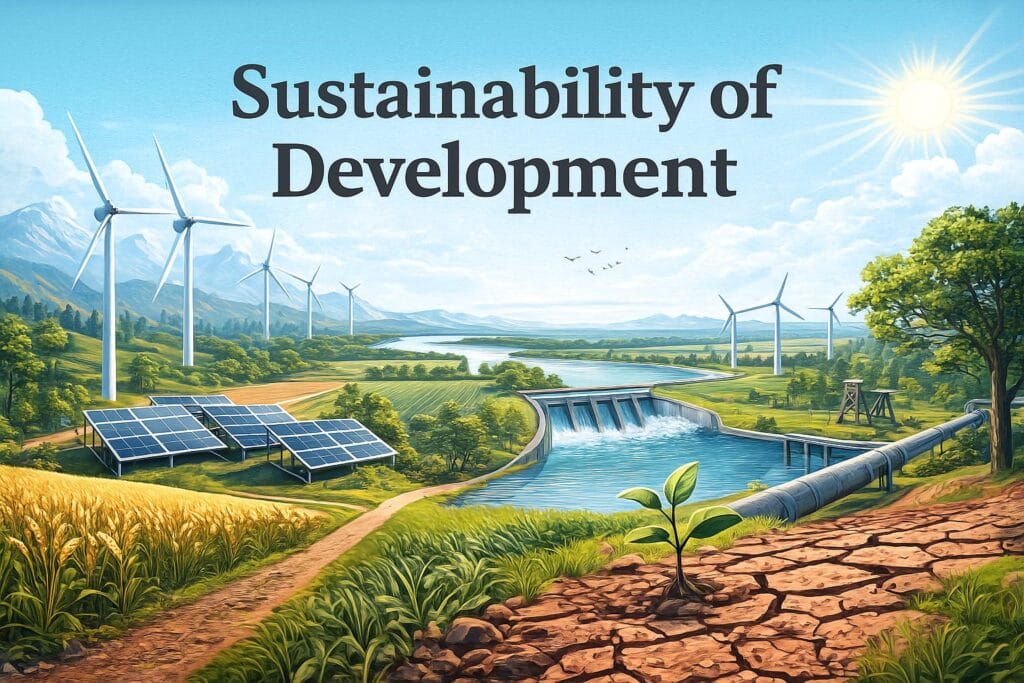
Sustainable development means meeting present needs without harming future resources. Development Class 10 Notes show that rapid industrialization and exploitation of non-renewable resources lead to pollution, climate change and biodiversity loss. Sustainable development encourages using renewable energy like solar and wind, conserving forests, reducing groundwater use, recycling waste and reducing carbon emissions. For example, using public transport reduces pollution, rainwater harvesting saves water, and afforestation protects soil and wildlife. It ensures long-term economic stability and environmental balance
Supportive Study Material Class 10 Science
- Class 10 Science Quiz
- Class 10 Science tests
- Class 10 Science Worksheets
- Class 10 Science PYQs
- Class 10 Science NCERT Solution